Every HVAC business wants more qualified leads, but not every phone call turns into a booked job. Some callers are shopping around for quotes, others need basic information, and some are dealing with genuine emergencies that require immediate attention. The challenge is identifying which calls deserve immediate action without forcing office staff to spend valuable time qualifying every caller.
AI voice agents solve this problem by acting as the first point of contact. Instead of simply answering calls, they ask intelligent questions, understand customer intent, and collect the information your team needs before anyone picks up the phone. This creates a smoother experience for customers while allowing your staff to focus on scheduling, dispatching, and serving qualified leads.
Why Lead Qualification Matters for HVAC Companies
Every incoming call has a cost. Whether it's an office administrator, dispatcher, or business owner answering the phone, someone is spending time understanding the customer's problem before deciding what happens next.
During busy seasons, dozens of calls can come in every hour. Some callers need emergency repairs, while others simply want to know your service area or pricing. Without a structured qualification process, valuable time is spent handling conversations that may never convert into paying customers.
The longer it takes to identify a qualified lead, the longer genuine customers wait for assistance. In many cases, they'll simply call another HVAC company that answers faster.
How Traditional Call Handling Slows Your Team Down
Most HVAC businesses follow a similar process. A customer calls, someone answers the phone, asks several questions, manually records customer information, determines the urgency, checks technician availability, and then either schedules an appointment or requests a callback.
This works when call volume is low, but it becomes difficult during peak heating and cooling seasons. Office staff are forced to switch between answering calls, helping walk-in customers, coordinating technicians, and responding to existing clients.
Every interruption increases the likelihood of mistakes, missed information, or long wait times.
How AI Voice Agents Qualify Every Lead Automatically
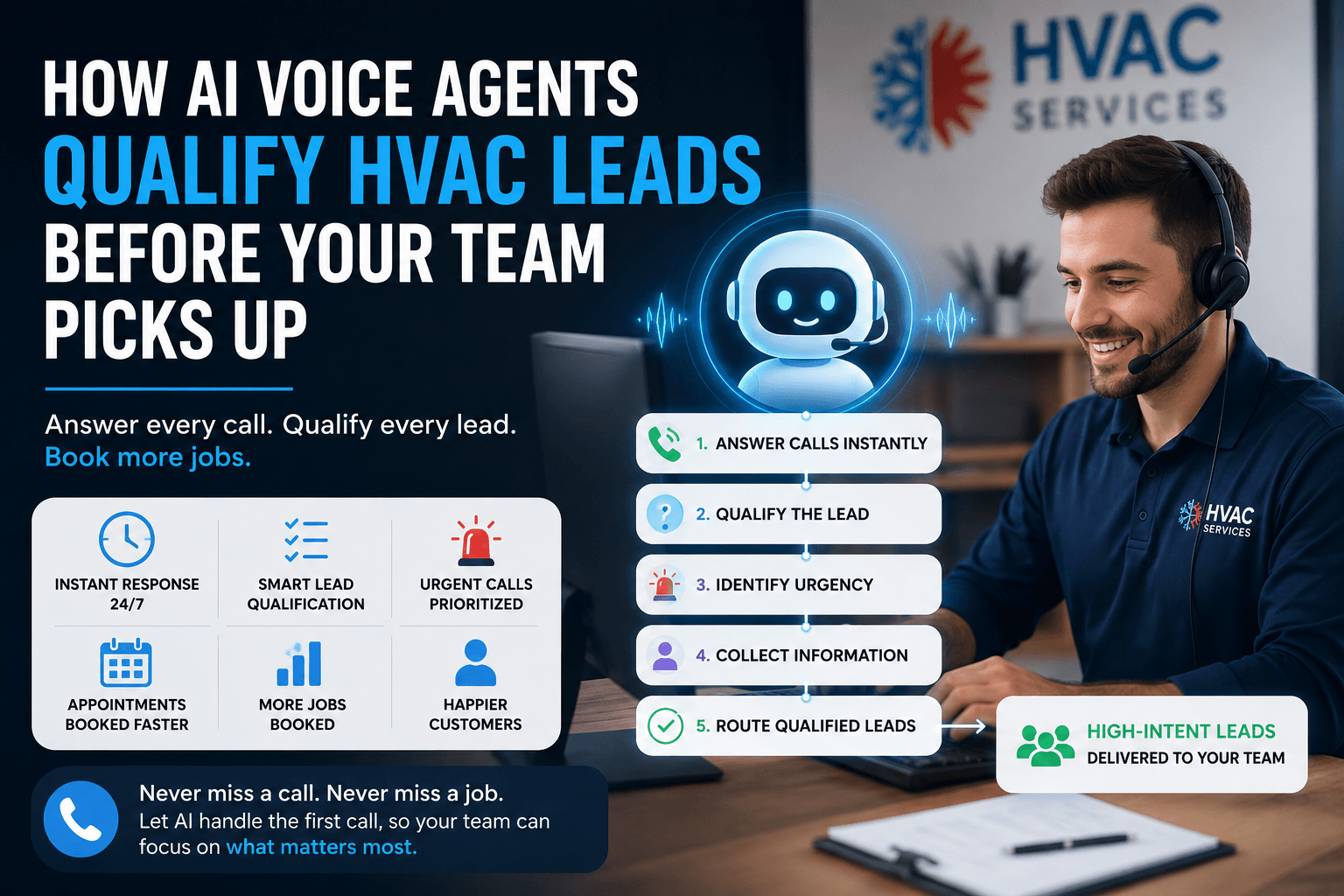
An AI voice agent answers every call immediately, regardless of the time of day. Instead of placing customers on hold or sending them to voicemail, it begins a natural conversation to understand why they're calling.
The AI asks questions such as:
- What problem are you experiencing?
- Is your heating or cooling system completely down?
- Is this an emergency?
- Have you worked with us before?
- What is the service address?
- When would you like a technician to visit?
As the conversation progresses, the AI builds a complete customer profile. By the time the call reaches your office or technician, they already know the customer's issue, location, urgency, and preferred appointment time.
Instead of spending the first five minutes gathering information, your team can focus on solving the customer's problem.
Prioritizing High-Intent Customers
Not every caller has the same level of urgency. Someone without air conditioning during a heatwave requires a much faster response than someone requesting an annual maintenance quote.
AI voice agents automatically recognize these differences and prioritize calls accordingly. Emergency requests can be transferred immediately to an on-call technician, while routine maintenance inquiries can be scheduled for the next available appointment.
This ensures your team spends more time responding to customers who need immediate assistance while maintaining an organized booking process for everyone else.
Reducing Administrative Work
Lead qualification is repetitive work, but it's also essential. AI voice agents remove much of this manual effort by collecting customer details before your staff becomes involved.
Instead of repeatedly asking for names, phone numbers, addresses, equipment types, and service issues, your team receives structured information that's ready to use.
This shortens every customer interaction and reduces administrative overhead throughout the day.
Creating a Better Customer Experience
Customers expect immediate responses when they have heating or cooling problems. Waiting on hold or leaving a voicemail often creates frustration, especially during emergencies.
An AI voice agent provides instant engagement, answers common questions, schedules appointments, and keeps conversations moving without unnecessary delays.
For customers, it feels like speaking to a knowledgeable receptionist who's always available.
Supporting Your Team, Not Replacing It
One of the biggest misconceptions about AI voice agents is that they're designed to replace office staff. In reality, they're built to eliminate repetitive administrative tasks so your team can focus on work that requires human expertise.
Your office staff still handle complex customer situations, technician coordination, pricing discussions, and relationship building. The AI simply ensures every caller reaches them with the right information already collected.
Rather than replacing employees, it helps them work more efficiently during both normal operations and seasonal spikes.
Final Thoughts
Every HVAC call represents a potential opportunity, but not every opportunity deserves the same level of attention. AI voice agents help businesses identify qualified leads faster, prioritize urgent service requests, and reduce the time spent on repetitive administrative work.
Instead of asking your team to qualify every caller manually, AI ensures every conversation begins with the information needed to move quickly. The result is faster response times, better customer experiences, and more booked jobs without increasing staffing costs.
Key Takeaways
- •AI voice agents qualify HVAC leads before your team joins the conversation.
- •Emergency service requests are identified and prioritized automatically.
- •Office staff spend less time collecting customer information manually.
- •Customers receive immediate responses instead of waiting on hold or leaving voicemails.
- •Better lead qualification improves booking rates and technician productivity.
Feature Comparison Analysis
| Feature | Traditional Call Handling | AI Voice Agent |
|---|---|---|
| Response Time | Customers may wait on hold or reach voicemail. | Every call is answered instantly, 24/7. |
| Lead Qualification | Staff manually qualify every caller. | AI qualifies every lead automatically. |
| Appointment Scheduling | Manual scheduling during office hours. | Appointments booked automatically, 24/7. |
| Emergency Detection | Relies on manual assessment. | Urgent calls are identified instantly. |
| Customer Information | Collected manually during each call. | Captured automatically before transfer. |