Healthcare Phone Systems Are Becoming the Biggest Operational Bottleneck
Healthcare has embraced digital transformation across diagnostics, medical imaging, telemedicine, and electronic health records. Yet one of the most critical patient touchpoints, the phone call, often remains surprisingly outdated.
Every missed call represents more than a missed conversation. It can mean a delayed diagnosis, an unbooked appointment, a frustrated patient, or even lost revenue. Research across healthcare operations consistently shows that a significant percentage of patient calls occur outside normal business hours, while front desk teams spend much of their day handling repetitive administrative conversations instead of supporting in-clinic patient care.
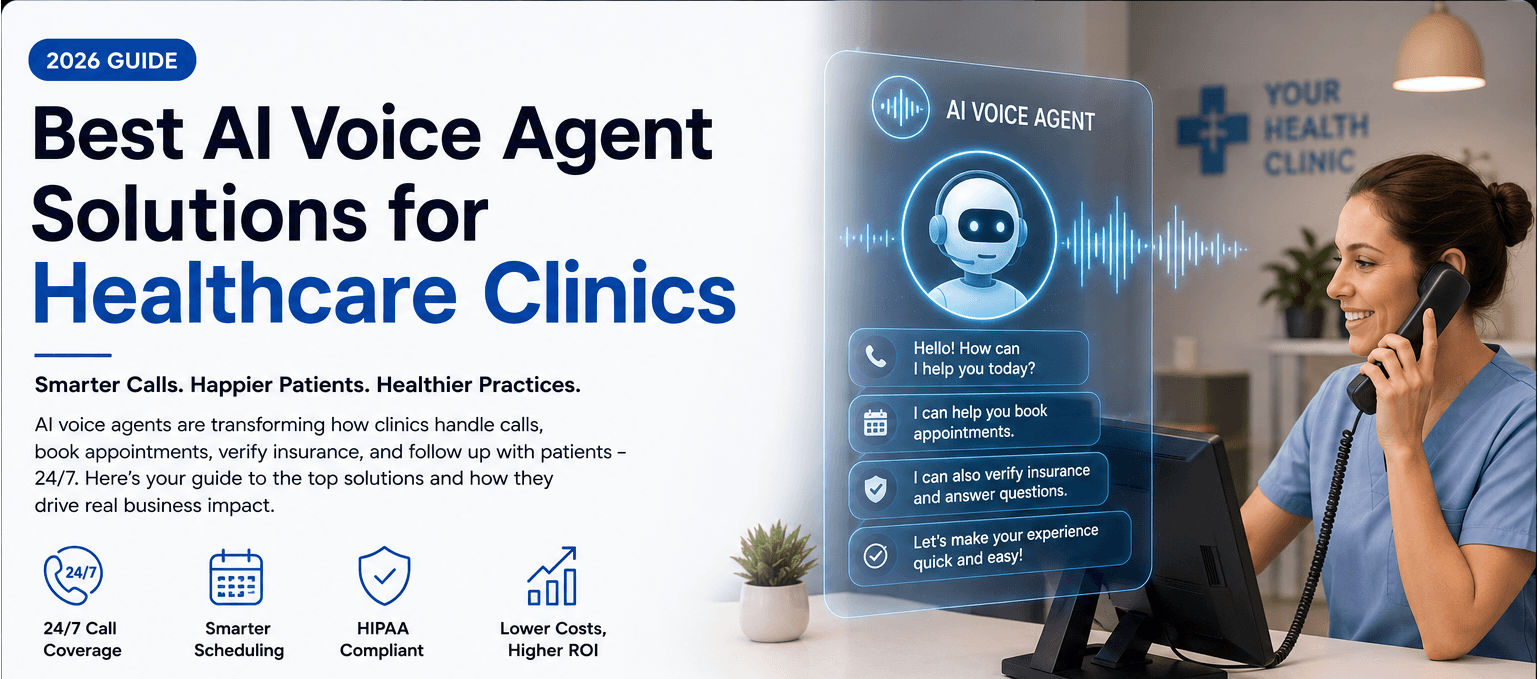
This is precisely where AI Voice Agents for Healthcare Clinics are creating measurable business value.
Unlike traditional IVR systems that simply navigate callers through numbered menus, AI voice agents understand natural language, maintain conversational context, perform real-time actions, and integrate directly with scheduling software, EHR platforms, CRM systems, and patient communication tools.
Instead of hearing "Press 2 to schedule an appointment," patients can simply say:
"I'd like to see a dermatologist next Thursday morning."
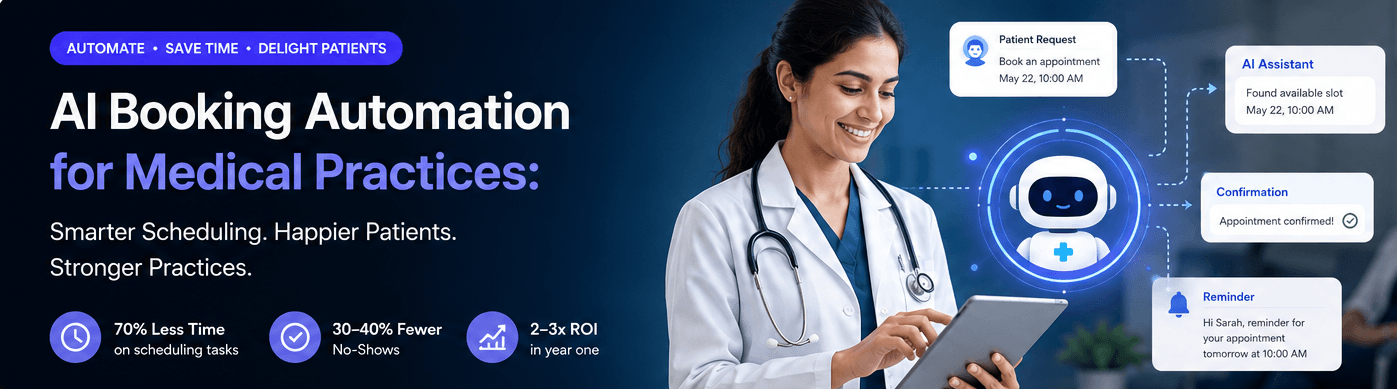
The AI understands the request, checks provider availability, books the appointment, confirms insurance requirements, and sends a confirmation message within seconds.
What Is an AI Voice Agent for Healthcare?
An AI voice agent is an intelligent conversational system capable of answering inbound and outbound patient calls using advanced speech recognition, natural language understanding, and large language models.
Unlike rule-based phone trees, healthcare voice AI can understand conversational requests, ask follow-up questions, access patient information securely, and complete real operational tasks without requiring human intervention for every interaction.
Today's enterprise healthcare voice agents commonly support:
- Appointment scheduling and rescheduling
- Patient intake automation
- Insurance verification
- Prescription refill requests
- Billing support
- Appointment reminders
- Patient follow-up calls
- Clinical triage assistance
- Multilingual patient communication
- After-hours call management
Rather than replacing healthcare professionals, these systems remove repetitive administrative work so staff can dedicate more time to delivering quality patient care.
Why Healthcare Clinics Are Investing in AI Voice Agents
The economics are compelling.
Healthcare providers continue facing rising patient volumes, staff shortages, increasing administrative workloads, and growing patient expectations for immediate service. Recruiting additional front-desk staff is expensive, while expanding call center operations often fails to solve after-hours accessibility.
AI voice agents address these challenges by operating continuously, handling thousands of simultaneous conversations, and integrating directly into existing clinical workflows.
Industry implementations have reported improvements including:
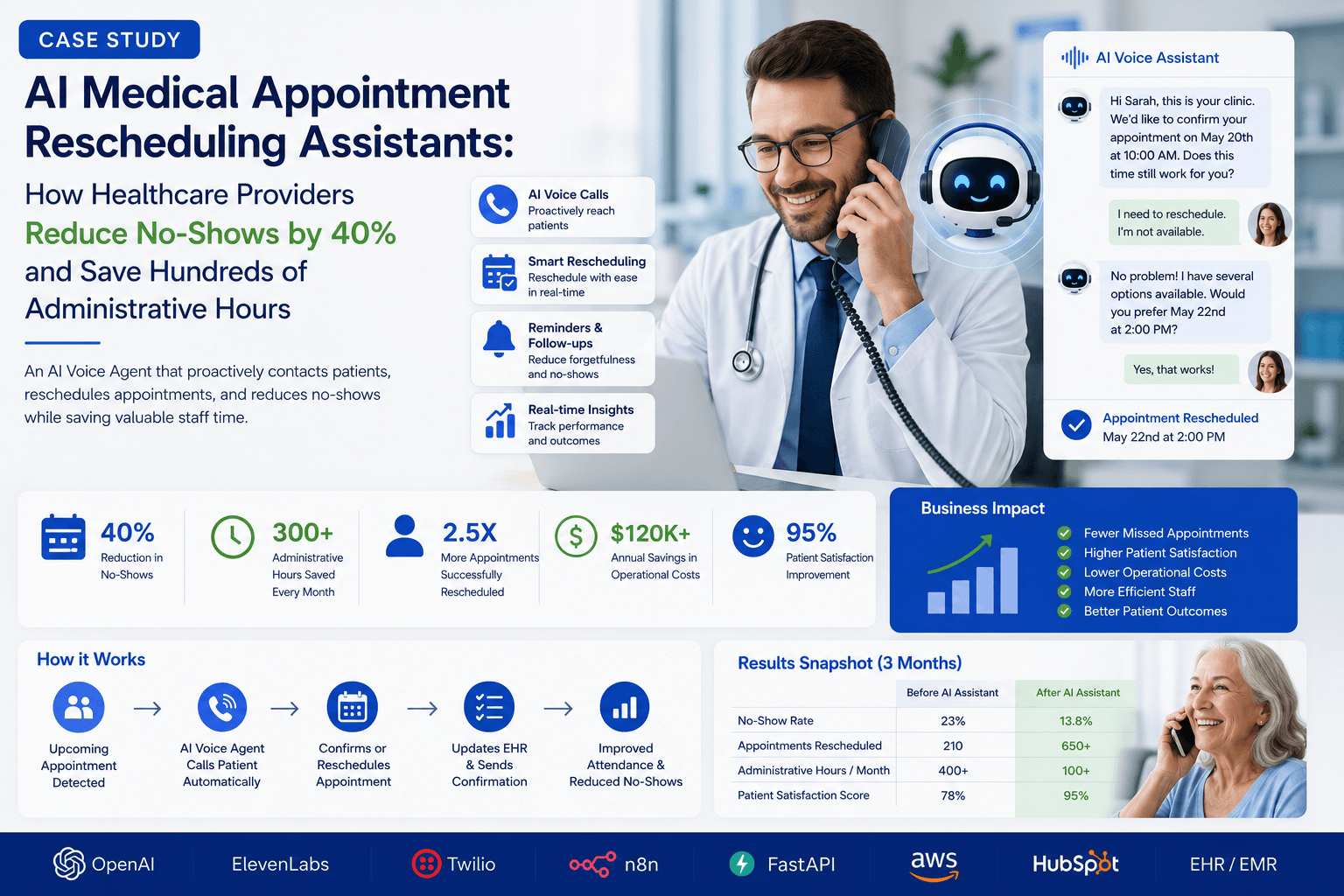
- 30% to 50% reduction in missed patient calls
- Significant reductions in appointment no-shows through automated reminder campaigns
- 24/7 patient support without increasing staffing costs
- Faster appointment booking and patient response times
- Higher administrative productivity through automation of repetitive phone workflows
For growing healthcare practices, these operational improvements often translate directly into higher patient retention, improved schedule utilization, and stronger financial performance.
The Most Valuable Healthcare Voice AI Workflows
While AI voice technology continues to evolve rapidly, organizations achieving the highest return on investment typically begin by automating high-volume administrative conversations before expanding into more advanced clinical workflows.
Core Healthcare Workflows AI Voice Agents Can Automate
Healthcare organizations generate thousands of patient interactions every month, but not every conversation requires clinical expertise. Modern AI voice agents excel at handling repetitive administrative workflows that consume valuable staff time while ensuring patients receive immediate assistance.
1. Intelligent Appointment Scheduling
Appointment scheduling remains the highest-volume workflow for most clinics. Instead of navigating through multiple phone menus, patients simply describe what they need in natural language.
The AI can identify the required specialty, check physician availability, suggest alternative time slots, schedule the appointment, send confirmation messages, and even update the clinic's scheduling software automatically.
For multi-location healthcare networks, the system can intelligently recommend the earliest available provider across multiple branches, helping improve appointment utilization and reduce patient waiting times.
2. Automated Appointment Reminders
Missed appointments remain one of the largest hidden costs for healthcare providers. AI voice agents automatically contact patients before scheduled visits, confirm attendance, offer rescheduling options when necessary, and notify clinic staff about cancellations.
This proactive communication helps improve schedule utilization while reducing revenue loss associated with patient no-shows.
3. Insurance Verification
Insurance eligibility verification often requires significant administrative effort. AI voice agents can collect insurance details, verify eligibility through integrated systems, explain coverage information to patients, and alert staff whenever additional verification or prior authorization is required.
This shortens patient onboarding while reducing manual administrative work.
4. Patient Intake
Instead of completing lengthy forms inside the clinic, patients can securely provide demographic information, medical history, allergies, medications, and visit reasons before arriving.
Because this information can be synchronized directly with Electronic Health Record (EHR) systems, clinicians receive more complete patient information before the consultation even begins.
5. Prescription Refill Requests
Routine prescription refill requests consume a surprising amount of administrative capacity. AI voice agents authenticate patients, collect medication details, verify refill eligibility according to predefined workflows, and route requests to the appropriate clinician for approval.
The patient receives updates automatically without repeatedly calling the clinic.
6. Billing and Payment Assistance
Patients frequently contact clinics with questions about invoices, payment options, outstanding balances, or insurance claims. AI voice agents provide immediate responses for common billing questions while escalating sensitive financial discussions to appropriate staff members.
7. After-Hours Patient Support
Many healthcare calls occur outside normal business hours. Instead of sending patients directly to voicemail, AI voice agents provide 24/7 assistance by answering questions, booking appointments, collecting callback requests, and identifying urgent situations that require immediate escalation.
This ensures every patient receives timely assistance regardless of clinic operating hours.
Best AI Voice Agent Solutions for Healthcare Clinics
The healthcare voice AI market has expanded rapidly over the past two years. While many conversational AI platforms offer voice capabilities, only a handful are purpose-built for healthcare environments where compliance, security, workflow integration, and patient safety are critical.
Infinitus
Best for: Enterprise hospitals, payer communication, revenue cycle automation
Infinitus is one of the most healthcare-focused AI voice platforms available today. Rather than functioning as a general customer service chatbot, it specializes in automating complex healthcare phone workflows such as prior authorization, benefits verification, referral management, and administrative communication between providers and insurance companies.
Healthcare organizations processing thousands of payer interactions every month can significantly reduce manual calling while accelerating reimbursement cycles.
Standout strengths:
- Healthcare-first architecture
- Enterprise scalability
- Revenue cycle automation
- HIPAA-ready infrastructure
Hyro
Best for: Large health systems and hospital networks
Hyro combines conversational AI across voice and digital channels to create unified patient experiences. The platform integrates with hospital scheduling systems, patient portals, and knowledge bases, enabling patients to receive consistent support regardless of communication channel.
Its no-code conversational management tools also make ongoing workflow updates significantly easier for healthcare operations teams.
Prosper AI
Best for: Private practices and multi-specialty clinics
Prosper AI focuses specifically on automating patient phone operations, including appointment scheduling, insurance verification, reminder campaigns, and outbound patient engagement.
Its healthcare-specific workflows make implementation faster for clinics seeking immediate operational improvements without large internal development teams.
Retell AI
Best for: Healthcare organizations building custom AI receptionists
Retell AI provides one of the most flexible voice AI infrastructures available today. Developers can build highly customized conversational experiences while maintaining low response latency, realistic speech synthesis, and secure integrations with existing healthcare software.
It is particularly well suited for organizations creating custom AI receptionists tailored to unique patient workflows.
Amelia
Best for: Enterprise patient engagement
Amelia offers enterprise conversational AI capable of supporting complete patient journeys, from appointment booking through post-treatment engagement. Large hospital systems often use Amelia to unify patient communication while improving operational efficiency across multiple departments.
Real-World Healthcare Applications
The strongest AI voice deployments rarely begin with replacing entire call centers. Instead, successful healthcare organizations start with repetitive administrative workflows before gradually expanding automation.
A dermatology clinic experiencing more than 500 weekly appointment calls can automate scheduling and reminders while allowing staff to focus exclusively on in-clinic patient interactions.
A diagnostic laboratory can automate appointment confirmations, preparation instructions, and report notifications, significantly reducing inbound call volume.
Similarly, dental clinics often deploy AI voice agents to manage cancellations, waitlists, and routine patient follow-ups, improving chair utilization without increasing staffing costs.
How to Choose the Right AI Voice Agent for Your Healthcare Clinic
Not every AI voice platform is designed specifically for healthcare. While many conversational AI solutions can answer phone calls, only a handful provide the compliance, integrations, and workflow automation required for medical practices.
Choosing the right platform should go beyond voice quality or pricing. Healthcare providers should evaluate how well the solution integrates into existing operations while maintaining regulatory compliance and delivering an excellent patient experience.
1. HIPAA Compliance Should Be Your First Requirement
Healthcare organizations handle protected health information (PHI) every day. Any AI voice platform processing patient conversations should provide strong security controls, encrypted communications, audit logs, role-based access control, and support Business Associate Agreements (BAAs).
Without these capabilities, even the most advanced conversational AI platform may not be suitable for clinical environments.
2. Native EHR Integration
The true value of an AI voice agent comes from its ability to perform real actions instead of simply answering questions.
Look for platforms that integrate directly with major Electronic Health Record systems and practice management software so patients can:
- Book appointments
- Reschedule existing visits
- Cancel appointments
- Update patient information
- Access appointment status
- Receive automated confirmations
Without integration, staff will still need to manually complete every request, limiting the overall value of automation.
3. Natural Human Conversation
Patients should never feel like they are talking to a scripted robot.
Modern healthcare voice AI should understand natural language, recognize interruptions, maintain conversational context, ask clarifying questions, and respond with human-like speech.
The more naturally the AI communicates, the higher the patient adoption rate and the lower the need for human intervention.
4. Multilingual Patient Support
Healthcare providers increasingly serve diverse patient populations. Voice agents capable of supporting multiple languages improve accessibility while helping clinics deliver more inclusive care.
Multilingual communication also reduces misunderstandings during appointment scheduling, insurance verification, and patient intake.
5. Reliable Human Escalation
Even the most capable AI should recognize its limitations.
Complex billing issues, emergency symptoms, emotionally sensitive conversations, or requests requiring clinical judgment should be transferred immediately to qualified healthcare professionals.
The best AI voice agents know when to automate and when to involve a human.
Common Mistakes Clinics Make When Implementing AI Voice Agents
Many healthcare organizations expect immediate transformation after deploying conversational AI. In reality, successful implementations follow a phased rollout with continuous optimization.
The following mistakes frequently reduce implementation success.
- Trying to automate every workflow from day one.
- Deploying AI without integrating scheduling or EHR systems.
- Ignoring patient feedback during early deployment.
- Failing to define escalation rules for sensitive medical conversations.
- Measuring success using only call volume instead of operational outcomes.
- Underestimating staff training and change management.
Organizations that begin with appointment scheduling, reminder calls, and patient FAQs typically achieve faster adoption before expanding automation into more advanced workflows.
Measuring Success After Deployment
Healthcare leaders should evaluate AI voice agents using measurable operational and patient experience metrics instead of focusing solely on the number of automated conversations.
Some of the most valuable Key Performance Indicators (KPIs) include:
- Average patient wait time
- Missed call percentage
- Appointment booking completion rate
- No-show reduction
- Average call handling time
- Administrative hours saved
- Patient satisfaction score (CSAT)
- First-call resolution rate
- Front desk productivity improvements
- Cost per patient interaction
Tracking these metrics allows healthcare organizations to continuously improve AI workflows while demonstrating measurable return on investment.
The Future of AI Voice Agents in Healthcare
The next generation of healthcare voice AI will move beyond appointment scheduling and administrative support.
Future AI voice agents will proactively engage patients throughout their healthcare journey by assisting with chronic disease management, medication adherence, preventive care reminders, personalized follow-up programs, and AI-assisted clinical documentation.
Combined with advancements in large language models, ambient clinical intelligence, and predictive analytics, AI voice agents are expected to become an integral layer connecting patients, providers, and healthcare systems through seamless conversational experiences.
Rather than replacing healthcare professionals, these technologies will continue reducing administrative burden while enabling clinicians to spend more time delivering high-quality patient care.
Final Thoughts
AI voice agents have evolved from simple virtual receptionists into intelligent operational assistants capable of transforming how healthcare organizations communicate with patients.
For clinics experiencing increasing call volumes, staffing shortages, or rising operational costs, implementing an AI voice agent is no longer simply a technology upgrade. It is a strategic investment in patient accessibility, operational efficiency, and long-term scalability.
The most successful deployments begin with clearly defined administrative workflows, integrate deeply with existing healthcare systems, maintain strict regulatory compliance, and continuously improve through performance analytics.
As conversational AI continues to mature, healthcare organizations that embrace intelligent voice automation today will be better positioned to deliver faster, more accessible, and more patient-centric care in the years ahead.
Feature Comparison Analysis
| Feature | Traditional Medical Reception | AI Voice Agent |
|---|---|---|
| Availability | Business hours only | 24/7 patient support |
| Concurrent Calls | One call at a time | Thousands simultaneously |
| Appointment Scheduling | Manual | Automated with EHR integration |
| Insurance Verification | Manual process | Automated workflow |
| Patient Wait Time | Often several minutes | Near instant response |
| Languages Supported | Depends on staff | Multilingual support |
| Reminder Calls | Manual outbound calls | Fully automated campaigns |
| Operational Cost | High recurring staffing costs | Lower long-term operating cost |
| Scalability | Requires additional hiring | Instantly scalable |
| Human Escalation | Native | Automatic when required |