Why AI Booking Automation Is Becoming Essential for Modern Medical Practices
Healthcare has entered a new era where patient expectations are increasingly shaped by the digital experiences they receive in banking, e-commerce, travel, and food delivery. Patients no longer expect to wait on hold for ten minutes to schedule an appointment or call back during office hours simply because the front desk is busy. They expect healthcare providers to be just as responsive as every other service they use.
This shift has created significant operational pressure on medical practices. Receptionists spend much of their day answering repetitive phone calls, checking provider availability, manually updating calendars, confirming appointments, rescheduling cancellations, and responding to routine patient questions. While these tasks are essential, they consume valuable staff time that could otherwise be dedicated to delivering a better in-clinic patient experience.
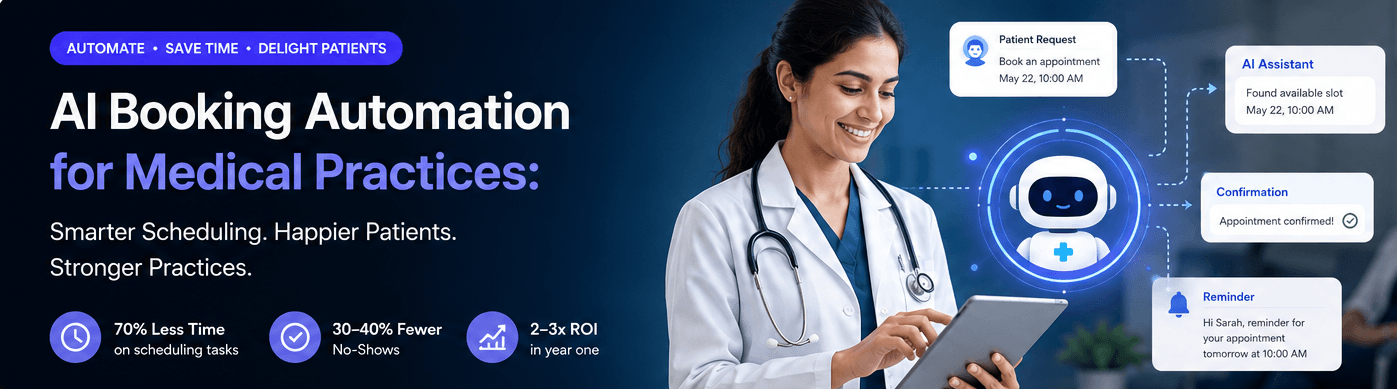
AI booking automation addresses this challenge by introducing intelligent scheduling systems capable of managing the complete appointment lifecycle. Instead of replacing administrative staff, AI acts as a digital scheduling assistant that operates continuously, answering calls, responding to website visitors, booking appointments, sending reminders, and updating calendars in real time.
The result is a healthcare practice that becomes more efficient, more accessible, and significantly more scalable without requiring proportional increases in administrative staffing.
What Is AI Booking Automation?
AI Booking Automation refers to the use of conversational artificial intelligence, natural language processing (NLP), workflow automation, and scheduling intelligence to automate patient appointment management.
Unlike traditional online booking software that simply displays available appointment slots, AI scheduling assistants actively understand what patients are requesting and make intelligent scheduling decisions.
For example, rather than asking a patient to navigate multiple booking screens, an AI assistant can understand a request such as:
"I've been having recurring back pain and I'd like to see the earliest available orthopedic specialist next week after 3 PM."
The AI interprets the patient's intent, determines the required appointment type, checks provider availability, applies clinic scheduling rules, verifies appointment duration, identifies the most suitable physician, books the appointment, updates the Electronic Health Record (EHR), and immediately sends a confirmation.
The entire interaction can take less than one minute.
This conversational approach dramatically improves the patient experience while reducing repetitive administrative work.
Core Components of an AI Booking Automation System
Conversational AI
Modern AI scheduling assistants communicate naturally through voice, chat, SMS, WhatsApp, patient portals, and clinic websites. Instead of forcing patients to navigate rigid menu systems, conversational AI understands everyday language, follow-up questions, and scheduling preferences.
Intelligent Calendar Management
The AI continuously synchronizes with provider calendars, ensuring appointment availability remains accurate across all scheduling channels. This minimizes double bookings, scheduling conflicts, and manual calendar updates.
Workflow Automation
Booking an appointment involves much more than simply selecting a time slot. Automated workflows can trigger appointment confirmations, insurance reminders, pre-visit instructions, digital intake forms, prescription reminders, consent documentation, and follow-up communications without requiring staff intervention.
EHR and Practice Management Integration
The most valuable AI booking systems integrate directly with Electronic Health Records (EHR), Practice Management Systems (PMS), CRM platforms, billing software, and patient communication platforms. This ensures appointment information remains synchronized across every operational system used by the clinic.
The Administrative Cost of Manual Scheduling
Appointment scheduling rarely receives the attention given to clinical operations, yet it represents one of the largest administrative cost centers inside healthcare organizations.
Consider a medium-sized medical practice employing four receptionists.
If each receptionist spends approximately five hours per day handling appointment-related activities including scheduling, rescheduling, reminder calls, cancellations, voicemail responses, and appointment confirmations, the practice is investing nearly one hundred administrative hours every week into repetitive scheduling tasks.
Many of these interactions involve predictable workflows that follow standardized business rules, making them ideal candidates for intelligent automation.
Industry studies consistently show that administrative expenses account for a significant proportion of healthcare operating costs. Reducing repetitive administrative work allows practices to improve efficiency while delivering faster service to patients.
How AI Booking Automation Works
Step 1: Patient Initiates Contact
The patient reaches the clinic through one of several communication channels:
- Voice phone call
- Website chat
- SMS conversation
- Google Business Profile messaging
- Patient portal
- Mobile application
Instead of waiting for a receptionist, the AI immediately begins the conversation.
Step 2: Understanding Patient Intent
Natural Language Processing enables the AI to determine what the patient actually wants.
For example, the system can distinguish between requests such as:
- I need to schedule my annual physical.
- I need to cancel tomorrow's appointment.
- Can I see a dermatologist this Friday?
- I'd like to book a follow-up consultation.
- Do you have appointments available after work?
The AI automatically classifies each request and launches the appropriate scheduling workflow.
Step 3: Appointment Qualification
Before confirming a booking, the AI evaluates multiple scheduling factors simultaneously.
- Medical specialty required
- Provider availability
- Appointment duration
- Clinic location
- Patient type, new or existing
- Urgency level
- Insurance requirements
- Provider preferences
- Equipment availability
This intelligent qualification process produces significantly better scheduling accuracy than manual booking while reducing calendar conflicts.
Step 4: Real-Time Scheduling
After identifying the appropriate appointment, the AI communicates directly with the scheduling system to reserve the selected time slot.
The appointment immediately appears inside the provider calendar while confirmation messages are automatically generated for the patient.
Step 5: Continuous Patient Communication
The booking process does not end after the appointment is created.
The automation continues managing patient communication by sending confirmations, reminders, preparation instructions, parking information, consent forms, digital check-in links, and follow-up notifications.
Every interaction remains personalized while requiring minimal manual effort from clinic staff.
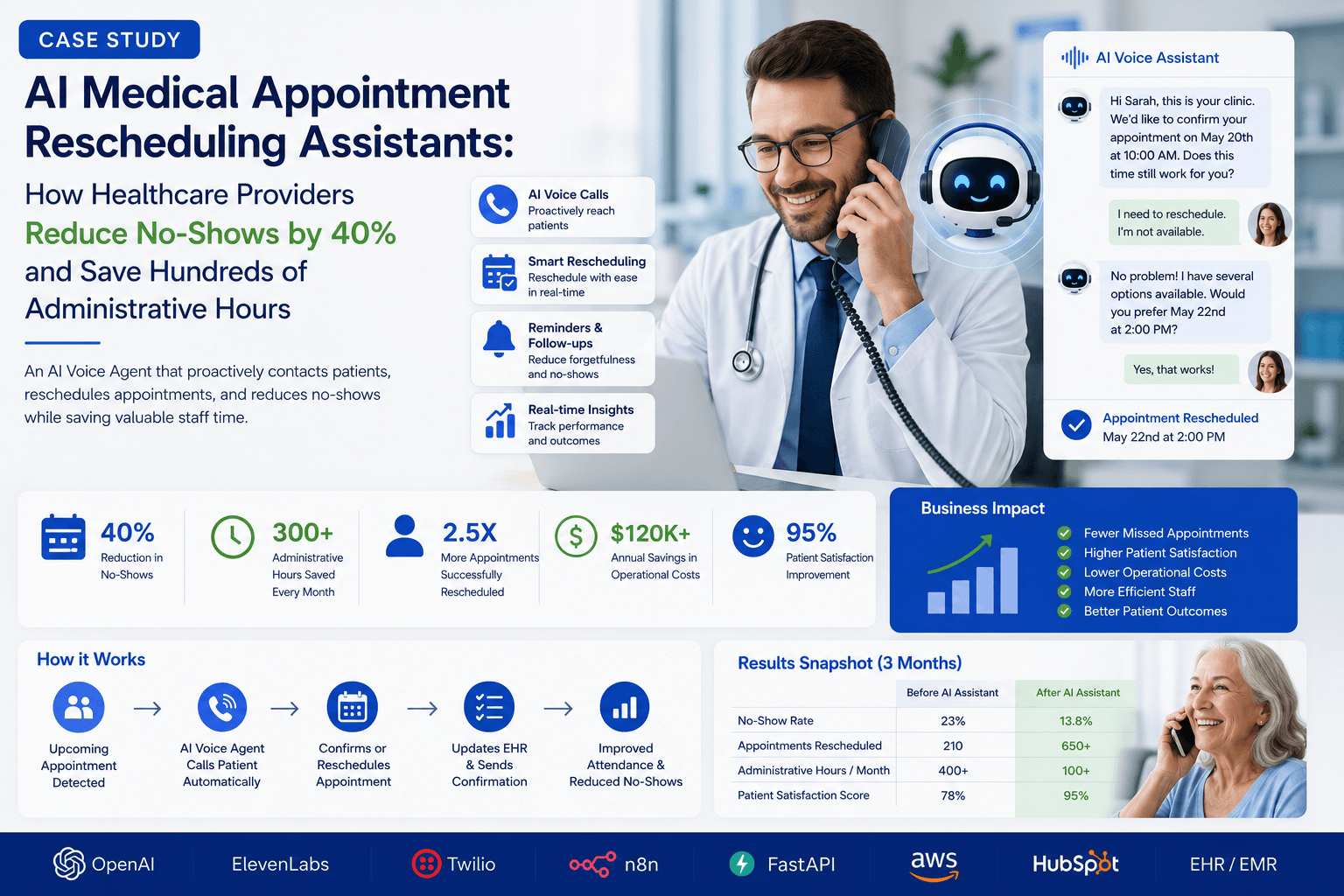
Real World Case Study: Reducing Patient Wait Times with AI Scheduling
A multi-specialty outpatient healthcare provider struggled with long call queues during peak morning hours. Receptionists frequently managed simultaneous incoming calls while attempting to assist patients already present at the front desk.
Patients often abandoned calls after waiting several minutes, resulting in lost appointment opportunities and growing frustration.
The organization implemented an AI voice booking assistant capable of answering every incoming scheduling call instantly.
Within the first few months, average patient response time dropped dramatically because every call was answered immediately. Administrative staff were no longer interrupted by repetitive scheduling requests and instead focused on higher-value patient interactions, insurance verification, and in-clinic support.
The practice also experienced a measurable increase in successfully completed appointment bookings because patients no longer abandoned calls during busy periods.
This illustrates one of the greatest strengths of AI booking automation. Rather than increasing staff capacity linearly, practices can effectively provide unlimited simultaneous scheduling conversations regardless of call volume.
AI Booking Automation vs Traditional Online Appointment Scheduling
Many healthcare providers already offer online appointment booking, but traditional scheduling software and AI booking automation solve very different problems.
Conventional booking systems function as digital calendars. They display available time slots and allow patients to select one manually. While this eliminates some phone calls, it still requires patients to understand appointment types, provider availability, clinic policies, and scheduling rules.
AI booking automation goes several steps further.
Instead of asking patients to navigate booking interfaces, conversational AI guides the entire process naturally. Patients simply describe what they need, and the AI determines the appropriate provider, appointment duration, location, and availability before completing the booking.
| Capability | Traditional Booking Software | AI Booking Automation |
|---|---|---|
| 24/7 Scheduling | ✓ | ✓ |
| Natural Language Conversations | ✗ | ✓ |
| Voice Booking | ✗ | ✓ |
| Automatic Rescheduling | Limited | ✓ |
| Waitlist Management | Rarely Available | ✓ |
| Intelligent Provider Matching | ✗ | ✓ |
| Workflow Automation | Minimal | Extensive |
| Conversational Patient Support | ✗ | ✓ |
As healthcare organizations continue investing in digital transformation, AI booking assistants are increasingly replacing static booking portals with intelligent patient engagement platforms.
The Business Impact of AI Booking Automation
Healthcare executives often evaluate automation projects based on operational efficiency, patient satisfaction, and financial return. AI booking automation performs well across all three categories because scheduling affects nearly every patient interaction.
Reduced Administrative Costs
Industry implementations have shown that intelligent scheduling workflows can reduce manual scheduling effort by approximately 30 to 40 percent, depending on appointment complexity and existing operational processes.
Rather than hiring additional receptionists as patient volume grows, practices can scale appointment capacity using AI while allowing administrative teams to focus on patient-facing responsibilities.
Lower Patient No Show Rates
Missed appointments remain one of the largest sources of lost revenue for healthcare organizations.
Traditional reminder systems typically send a single SMS or email before the appointment. AI scheduling systems continuously monitor patient responses and adapt reminder workflows accordingly.
For example, if a patient does not confirm an appointment, the AI can automatically send follow-up reminders, initiate a voice call, or offer convenient rescheduling options before the appointment is missed.
This proactive communication significantly increases appointment attendance while reducing unused provider capacity.
Improved Provider Utilization
Provider schedules often contain unused gaps caused by late cancellations.
Modern AI scheduling assistants automatically maintain digital waitlists. When an appointment becomes available, eligible patients receive immediate notifications offering the newly available time slot.
This allows practices to recover revenue that would otherwise be lost.
Real World Case Study: Dental Group Expands Without Hiring Additional Receptionists
A regional dental group operating several clinics experienced rapid patient growth. Appointment requests increased substantially, particularly during evenings when administrative offices were closed.
Instead of expanding its reception team, the organization deployed an AI scheduling assistant across its website and phone system.
The AI managed routine appointment bookings, hygiene visits, orthodontic consultations, emergency requests, reminder communications, and cancellations while integrating directly with the clinic's practice management software.
Administrative staff continued handling insurance verification, treatment planning, and complex patient questions while AI managed routine scheduling.
The organization successfully increased appointment capacity without proportional increases in administrative staffing costs, demonstrating how AI automation scales operations more efficiently than manual processes.
Real World Case Study: Dermatology Clinic Reduces Last Minute Cancellations
A dermatology practice frequently experienced appointment gaps caused by late cancellations.
Because cosmetic procedures often require specialized equipment and longer appointment durations, every unused slot represented lost revenue.
The clinic implemented AI booking automation with intelligent waitlist management.
Whenever a cancellation occurred, eligible patients automatically received personalized notifications offering earlier appointment opportunities.
Patients accepted newly available appointments directly through SMS without contacting the clinic.
The practice substantially improved provider utilization while delivering faster access to care for patients waiting several weeks for appointments.
Healthcare Workflows That Can Be Fully Automated
Appointment scheduling is only the beginning of healthcare workflow automation.
Modern AI systems can orchestrate dozens of interconnected administrative processes throughout the patient journey.
Before the Appointment
- Appointment booking
- Insurance verification requests
- Patient intake forms
- Digital consent forms
- Identity verification
- Appointment reminders
- Directions and parking instructions
- Prescription preparation reminders
During the Appointment
- Digital patient check-in
- Queue management
- Real-time provider notifications
- Room assignment workflows
After the Appointment
- Follow-up appointment scheduling
- Patient satisfaction surveys
- Medication reminders
- Review requests
- Billing notifications
- Recall scheduling
Connecting these workflows creates an end-to-end patient engagement system rather than a standalone scheduling application.
Technology Stack Behind AI Booking Automation
Building a modern AI booking solution requires several technologies working together seamlessly.
Conversational AI Models
- OpenAI GPT models
- Claude
- Google Gemini
- Llama models
Voice AI Platforms
- Retell AI
- Bland AI
- Vapi
- ElevenLabs
Workflow Automation Platforms
- n8n
- Make
- Zapier
- Keragon
Healthcare Integrations
- Epic
- Cerner
- Athenahealth
- eClinicalWorks
- NextGen Healthcare
- DrChrono
Together, these technologies create an intelligent scheduling ecosystem capable of operating continuously with minimal human intervention.
Security, Privacy, and Regulatory Compliance
Healthcare organizations cannot compromise patient privacy while adopting AI.
Any AI booking automation platform should be designed around security, compliance, and responsible data governance.
Essential capabilities include:
- Encrypted communication channels
- Role-based access controls
- Secure authentication
- Comprehensive audit logs
- HIPAA compliance where applicable
- GDPR compliance for European patients
- Business Associate Agreements (BAAs)
- Secure cloud infrastructure
Healthcare providers should evaluate AI vendors not only on automation capabilities but also on compliance certifications, data residency options, disaster recovery policies, and security architecture.
The Competitive Advantage of AI Booking Automation
Patients increasingly choose healthcare providers based on convenience as much as clinical expertise.
A clinic that answers every call instantly, offers 24/7 appointment booking, remembers patient preferences, minimizes waiting times, and simplifies scheduling creates a noticeably better patient experience.
This operational excellence becomes a competitive differentiator.
As AI continues evolving, booking automation will no longer be viewed as an optional technology investment. It will become foundational infrastructure for healthcare organizations seeking sustainable growth, operational efficiency, and exceptional patient engagement.
A Practical Implementation Framework for AI Booking Automation
Successfully implementing AI booking automation requires more than simply deploying a chatbot or AI voice assistant. The most successful healthcare organizations approach implementation as a phased digital transformation initiative that prioritizes patient experience, operational efficiency, and seamless integration with existing clinical systems.
Phase 1: Analyze Existing Scheduling Workflows
Before introducing AI, practices should map every step of their current appointment process.
- How are appointments currently booked?
- Which appointment types require manual approval?
- Which providers have unique scheduling rules?
- How are cancellations handled?
- Where are the biggest administrative bottlenecks?
Understanding existing workflows allows AI scheduling logic to mirror real operational requirements instead of forcing clinics to change proven processes.
Phase 2: Connect Existing Systems
The AI assistant should integrate directly with the systems your practice already relies on.
- Electronic Health Records (EHR)
- Practice Management Software
- Google Calendar
- Microsoft Outlook
- CRM platforms
- Patient Portals
- Billing software
- Telehealth platforms
Real-time synchronization ensures appointments remain accurate across every operational platform.
Phase 3: Configure Scheduling Intelligence
Every clinic operates differently.
The AI should understand:
- Provider availability
- Appointment durations
- New vs returning patients
- Insurance restrictions
- Emergency appointments
- Provider specialties
- Location-specific calendars
- Holiday schedules
This level of configuration allows the AI to make scheduling decisions comparable to an experienced receptionist.
Phase 4: Launch With Routine Appointment Types
Rather than automating every scheduling scenario immediately, many successful organizations begin with predictable appointment categories such as:
- Annual checkups
- Dental cleanings
- Follow-up consultations
- Vaccinations
- Physiotherapy sessions
Once the AI consistently performs well, automation can gradually expand into more complex workflows.
Expected Return on Investment
Healthcare leaders increasingly evaluate AI investments based on measurable business outcomes rather than technology adoption alone.
While results vary by organization, clinics implementing AI booking automation commonly observe improvements across several operational metrics.
| Business Metric | Expected Improvement |
|---|---|
| Administrative workload | 30 to 40% reduction |
| Average patient response time | Near-instant responses, available 24/7 |
| Missed appointment rates | 10 to 30% reduction depending on reminder strategy |
| Call abandonment | Significant reduction during peak hours |
| Appointment booking speed | Often reduced from several minutes to under one minute |
| Provider utilization | Improved through intelligent waitlist management |
| Patient satisfaction | Higher due to convenience and faster service |
Beyond direct financial returns, AI scheduling enables organizations to scale appointment capacity without increasing administrative headcount at the same rate.
Common Mistakes to Avoid
Healthcare organizations often underestimate the importance of implementation planning.
Deploying AI Without Workflow Design
AI should automate existing business rules rather than introducing unnecessary complexity. Mapping workflows before deployment significantly improves adoption.
Ignoring Human Escalation
Even advanced conversational AI cannot resolve every scenario. Patients should always have the option to transfer to a staff member when necessary.
Failing to Measure Performance
Organizations should continuously monitor key performance indicators including appointment conversion rate, booking completion time, no-show rate, patient satisfaction, and administrative workload reduction.
Using Disconnected Systems
AI provides maximum value when connected to calendars, EHR platforms, CRM systems, patient portals, and communication channels. Operating in isolation limits automation potential.
Why AI Voice Agents Are Transforming Patient Access
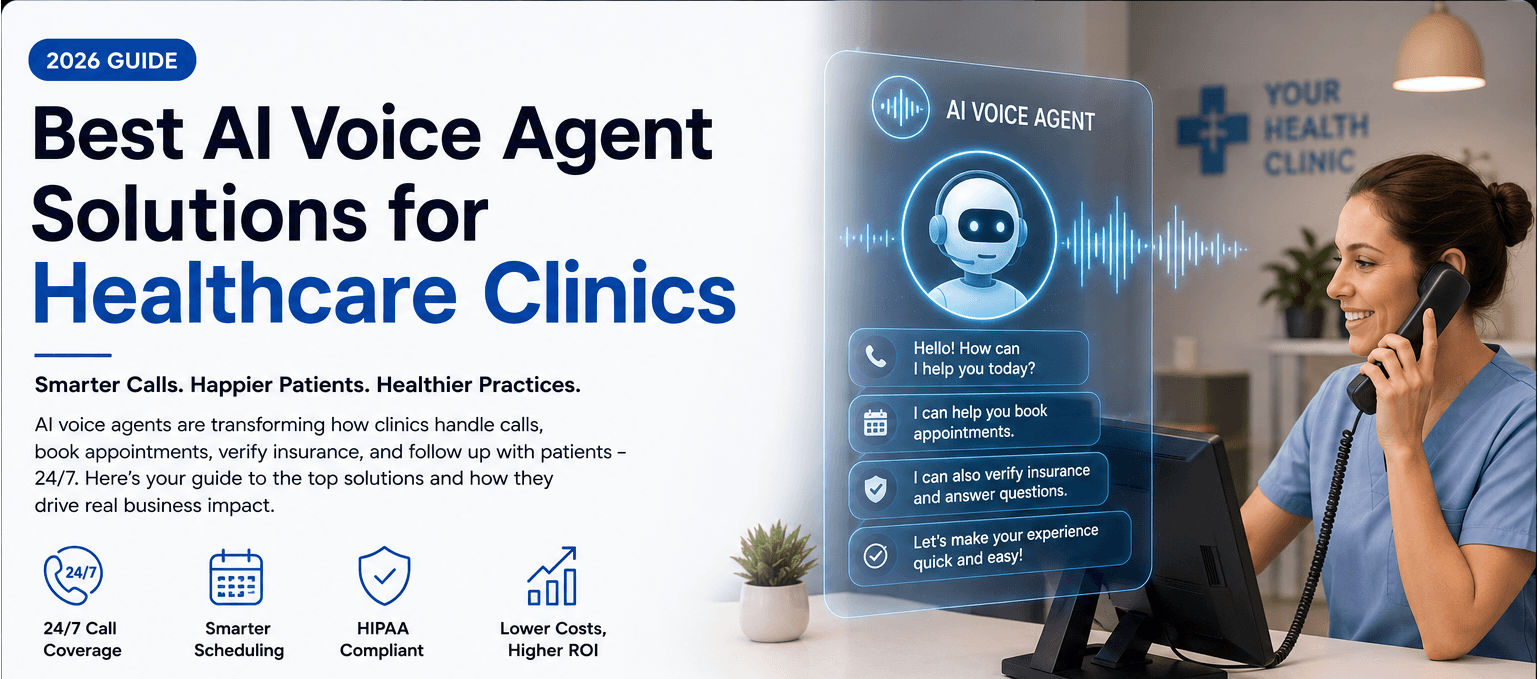
One of the most significant developments in healthcare automation is the rise of AI voice agents.
Unlike traditional Interactive Voice Response (IVR) systems that force callers through numbered menus, AI voice agents conduct natural conversations.
Patients simply describe what they need, while the AI understands context, asks follow-up questions, accesses scheduling systems, and completes appointments without transferring the call.
This conversational experience dramatically improves accessibility, particularly for elderly patients who may prefer speaking over navigating online booking interfaces.
The Future of AI Booking Automation
The next generation of AI scheduling systems will extend well beyond appointment booking.
Future platforms are expected to:
- Predict appointment demand using historical scheduling data.
- Automatically optimize provider calendars.
- Prioritize urgent patients based on clinical information.
- Recommend appointment types using previous medical history.
- Automatically verify insurance eligibility before booking.
- Coordinate referrals across multiple healthcare providers.
- Support multilingual conversations with patients worldwide.
- Continuously improve scheduling accuracy through machine learning.
As these capabilities mature, AI booking automation will become the digital front door for healthcare organizations, connecting patients with providers faster, more intelligently, and with significantly less administrative effort.
Final Thoughts
Appointment scheduling has evolved from a simple administrative function into a strategic component of patient experience and operational efficiency.
Medical practices that continue relying exclusively on manual scheduling face increasing pressure from rising patient expectations, staffing shortages, and growing administrative costs.
AI booking automation offers a practical solution by combining conversational AI, workflow automation, intelligent scheduling, and healthcare system integration into a unified patient engagement platform.
Rather than replacing healthcare professionals, AI empowers administrative teams to focus on meaningful patient interactions while routine scheduling tasks are handled automatically.
For clinics seeking to improve efficiency, reduce no-shows, increase appointment capacity, and deliver a modern patient experience, AI booking automation is no longer an emerging technology. It is rapidly becoming a competitive necessity.
Ready to Modernize Your Medical Practice?
Whether you operate a private clinic, specialty practice, dental office, physiotherapy center, or multi-location healthcare organization, AI booking automation can dramatically improve patient access while reducing administrative workload.
Implementing an intelligent scheduling assistant today positions your practice to deliver faster service, better patient experiences, and sustainable operational growth for years to come.
Feature Comparison Analysis
| Feature | Traditional Appointment Scheduling | AI Booking Automation |
|---|---|---|
| Booking Hours | Office Hours Only | 24/7 Availability |
| Appointment Booking | Manual | Fully Automated |
| Voice Scheduling | Receptionist | AI Voice Agent |
| Chat Scheduling | Limited | Conversational AI |
| Calendar Sync | Manual | Real-Time |
| No-show Prevention | Manual Reminders | Intelligent Automated Reminders |
| Rescheduling | Staff Dependent | Instant AI Rescheduling |
| Waitlist Management | Manual | Automated |
| Multi-location Support | Difficult | Native |
| Analytics | Limited | Advanced Dashboards |
| Administrative Workload | High | Significantly Reduced |
| Scalability | Requires More Staff | Easily Scalable |