Running a healthcare practice today involves much more than treating patients. Every day, clinics and hospitals manage appointment requests, follow up calls, insurance queries, prescription refill requests, and countless routine phone conversations. While these tasks are essential, they also take up valuable time that healthcare professionals could spend providing patient care.
This is why many healthcare organizations are adopting AI voice agents. These intelligent virtual assistants can answer calls, schedule appointments, send reminders, and respond to common patient questions without human intervention. Rather than replacing your team, they handle repetitive administrative work so doctors, nurses, and support staff can focus on delivering better care.
What Are AI Voice Agents?
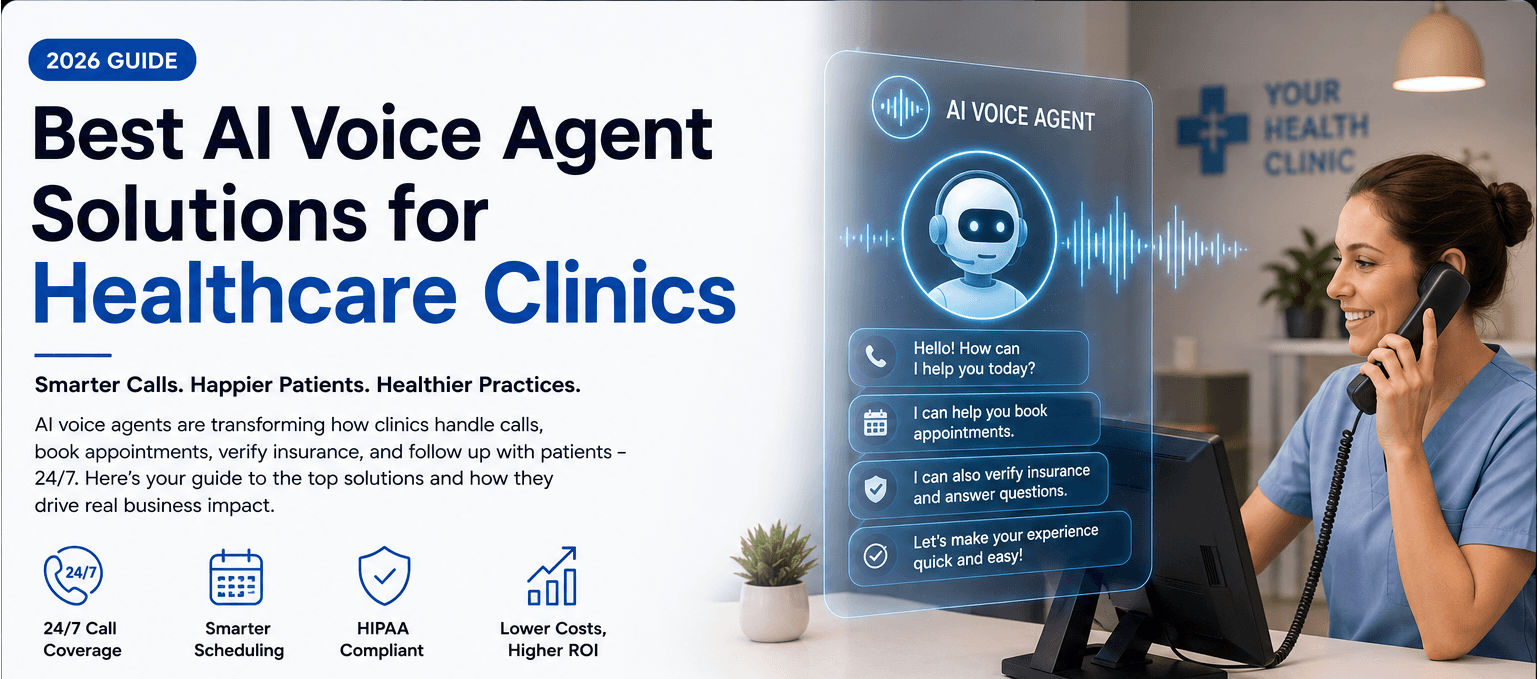
AI voice agents are virtual assistants powered by artificial intelligence, natural language processing (NLP), and speech recognition. Unlike traditional automated phone systems that require patients to navigate multiple menu options, AI voice agents understand natural conversations and respond in a way that feels more human.
They can assist with:
- Booking appointments
- Rescheduling appointments
- Sending appointment reminders
- Answering frequently asked questions
- Routing calls to the appropriate department
- Collecting patient information
- Handling prescription refill requests
Because they operate around the clock, patients receive immediate assistance whenever they call.
Reduce Administrative Workload
Administrative work is one of the biggest challenges for healthcare providers. Receptionists and administrative staff spend a large part of their day answering the same questions, confirming appointments, and managing patient records.
AI voice agents automate these repetitive conversations, allowing staff to focus on patients who need personal attention. This improves productivity without increasing workload or requiring additional resources.
Improve the Patient Experience
Patients expect fast and convenient service. Long wait times and unanswered phone calls can lead to frustration and may even discourage patients from booking appointments.
AI voice agents answer calls instantly and provide accurate information within seconds. Whether a patient wants to schedule an appointment, check clinic hours, or ask about available services, they receive quick assistance without waiting on hold.
Provide 24/7 Support
Healthcare needs do not stop after business hours. Many patients prefer scheduling appointments in the evening or during weekends when they have free time.
AI voice agents provide support 24 hours a day, seven days a week. They continue answering calls even when the clinic is closed, making healthcare services more accessible while reducing pressure on staff.
Reduce Missed Appointments
Missed appointments affect both patient care and clinic revenue.
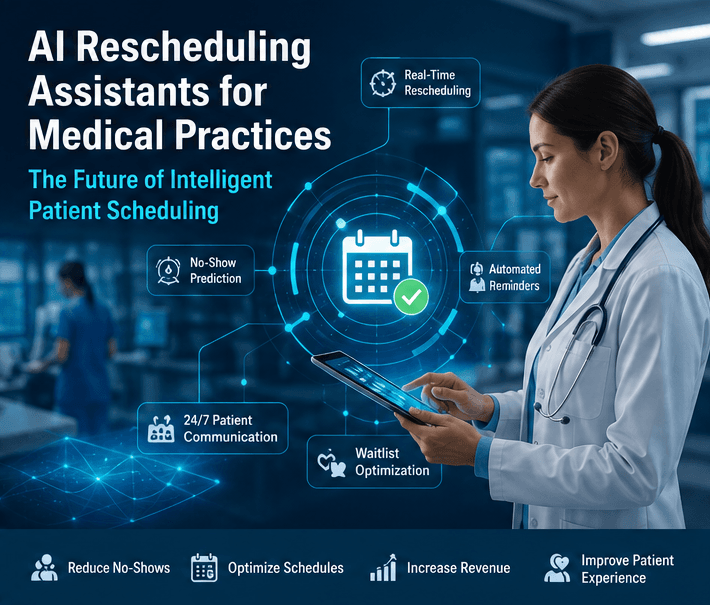
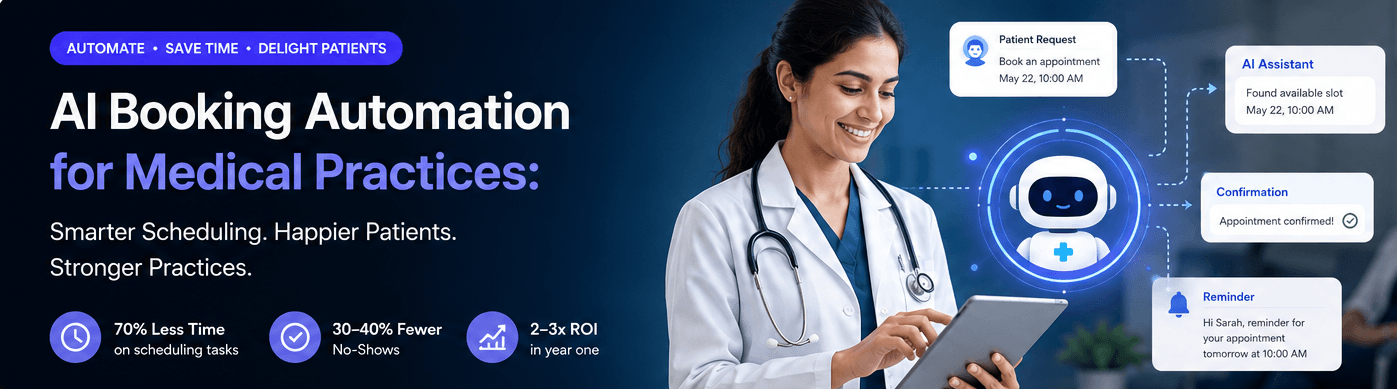
AI voice agents automatically send reminders, confirm appointments, and help patients reschedule when necessary. This simple automation reduces no shows and helps healthcare providers make better use of their schedules.
Lower Operational Costs
As patient numbers grow, many healthcare organizations need additional administrative staff to manage increasing call volumes. This can significantly increase operating expenses.
AI voice agents handle hundreds of routine conversations every day without requiring additional staff. Healthcare providers can improve efficiency while keeping operational costs under control.
Support Multiple Languages
Healthcare providers often serve patients from different cultural and linguistic backgrounds.
Many AI voice agents support multiple languages, making it easier for patients to communicate in the language they are most comfortable using. Better communication leads to fewer misunderstandings and a better overall patient experience.
Integrate with Existing Healthcare Systems
Modern AI voice agents integrate seamlessly with healthcare software that organizations already use.
These systems can connect with:
- Electronic Health Records (EHR)
- Electronic Medical Records (EMR)
- Appointment scheduling platforms
- Practice management software
- CRM systems
By accessing real time information, AI voice agents provide more accurate responses and help create a smoother workflow across the organization.
Generate Valuable Insights
Every patient interaction provides useful information that can help improve operations.
AI voice agents can track:
- Call volumes
- Peak calling hours
- Frequently asked questions
- Appointment trends
- Patient satisfaction
- Common service requests
These insights help healthcare providers identify opportunities to improve efficiency, optimize staffing, and deliver better patient experiences.
Common Applications of AI Voice Agents
Healthcare providers are already using AI voice agents for many routine tasks, including:
- Appointment scheduling
- Appointment reminders
- Patient registration
- Insurance verification
- Billing support
- Prescription refill requests
- Patient follow up calls
- Call routing
- Patient satisfaction surveys
- Answering frequently asked questions
Automating these routine interactions allows healthcare teams to spend more time providing quality care instead of handling repetitive administrative work.
Looking Ahead
Artificial intelligence is becoming an increasingly important part of modern healthcare. As the technology continues to evolve, AI voice agents will become even more capable of handling complex conversations while integrating more deeply with clinical workflows.
In the future, they may assist with medication reminders, patient triage, chronic disease management, and proactive wellness check ins. Healthcare providers that adopt AI voice technology today will be better prepared to meet rising patient expectations while improving efficiency across their organizations.
Conclusion
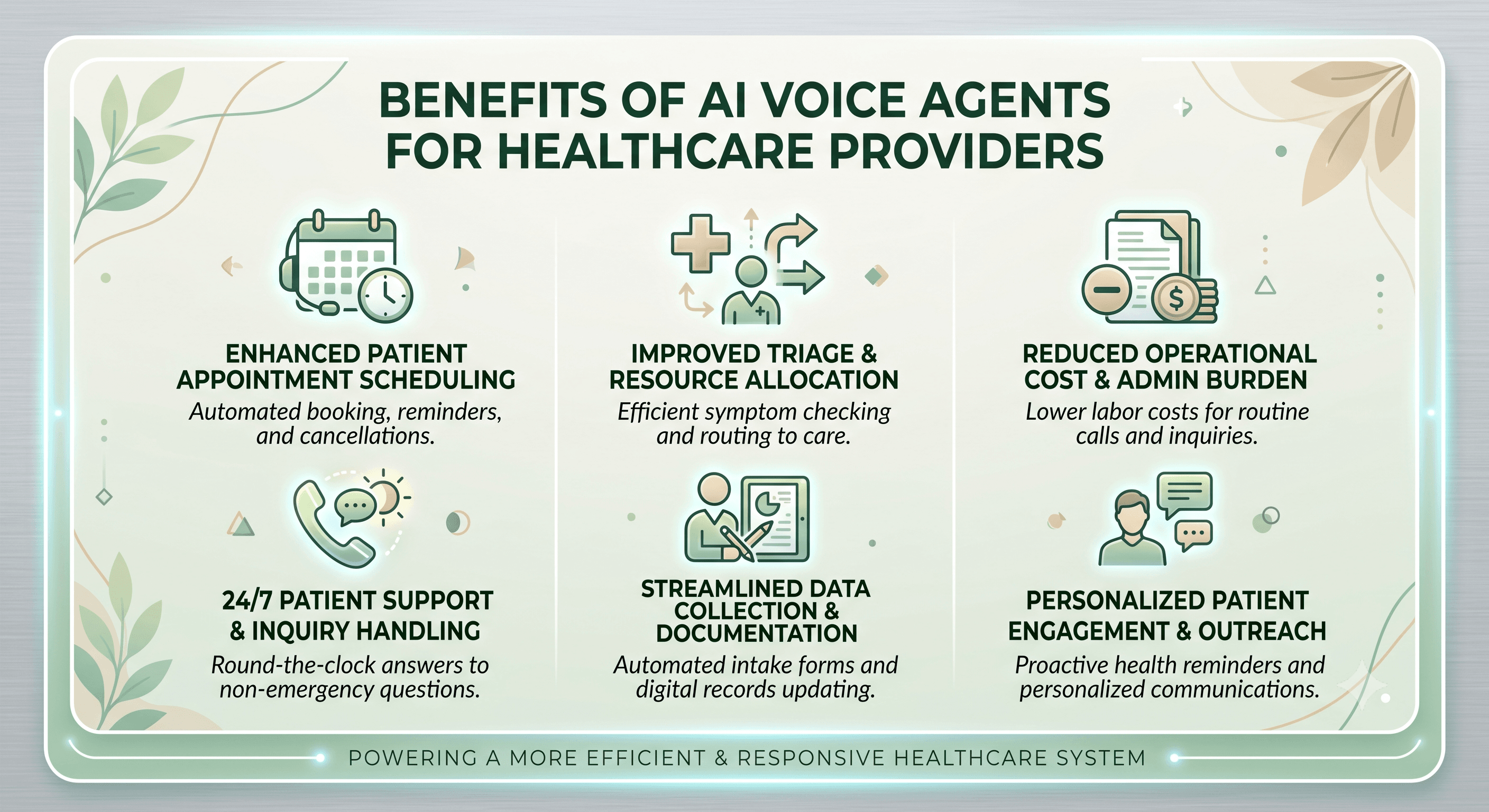
AI voice agents are transforming the way healthcare providers communicate with patients. By automating routine phone conversations, reducing administrative workload, improving appointment management, and providing 24/7 support, they help organizations deliver better patient experiences while operating more efficiently.
The goal is not to replace healthcare professionals. Instead, AI voice agents free up valuable time so doctors, nurses, and administrative staff can focus on what matters most: delivering exceptional patient care. As healthcare continues to embrace digital transformation, AI voice agents are becoming an essential tool for clinics, hospitals, and medical practices looking to improve efficiency, reduce costs, and enhance patient satisfaction.
Key Takeaways
- •AI voice agents provide 24/7 patient support.
- •They automate appointment scheduling and reminders.
- •Healthcare staff spend less time on repetitive administrative tasks.
- •Patients experience shorter wait times and faster responses.
- •Voice AI integrates with EHR, EMR, CRM, and scheduling systems.
- •Healthcare providers can reduce operational costs while improving efficiency.
Traditional Patient Support vs AI Voice Agents
| Feature | Traditional Support | AI Voice Agents |
|---|---|---|
| Availability | Business Hours | 24/7 |
| Appointment Scheduling | Manual | Automated |
| Call Handling | One patient at a time | Multiple simultaneous calls |
| Wait Time | High | Minimal |
| Administrative Work | High | Significantly Reduced |