Introduction to AI Story Writing Tools
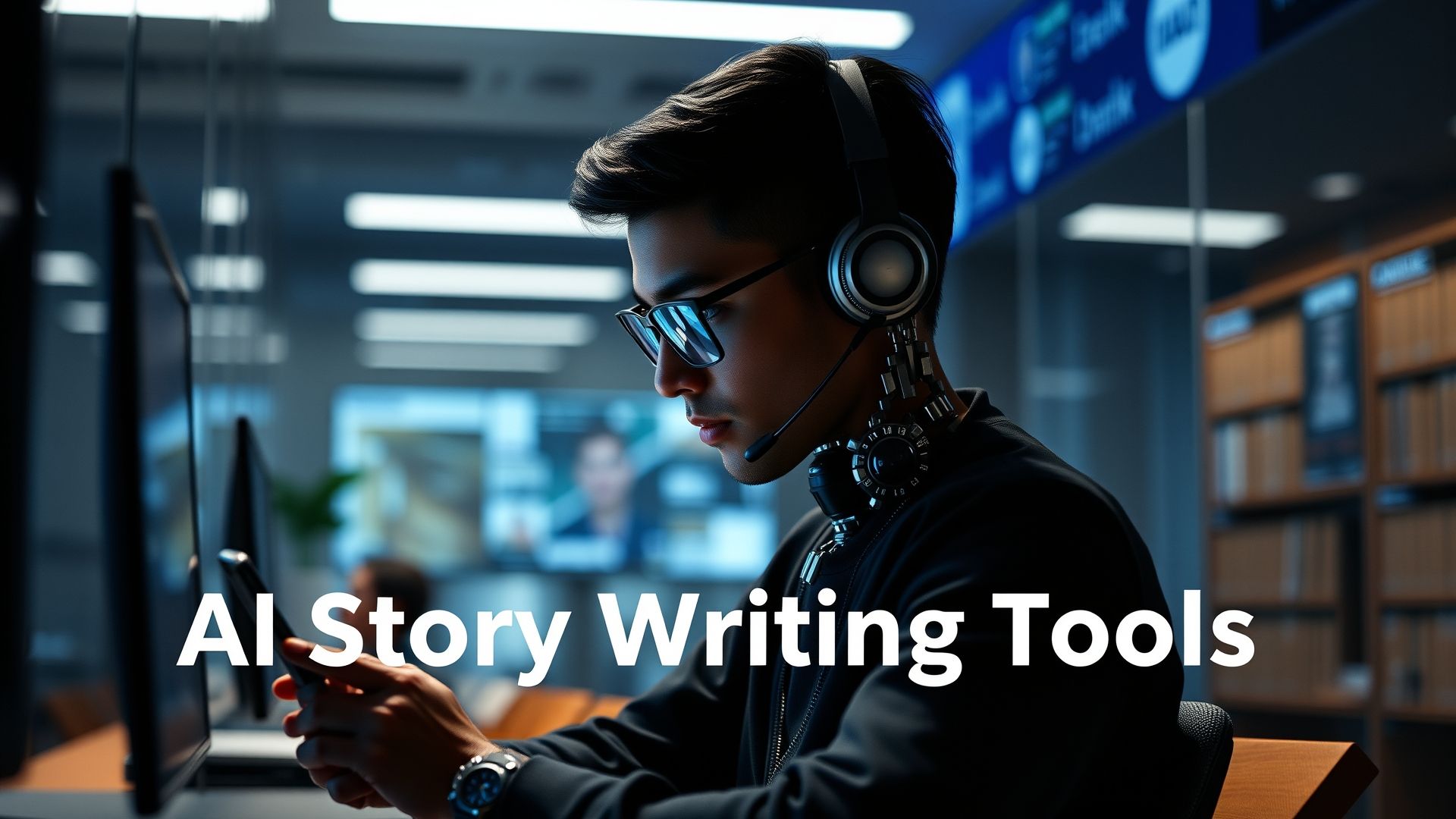
Storytelling has entered a new era where artificial intelligence becomes a collaborative partner rather than just a tool. AI story writing tools represent a transformative development in creative industries, offering writers unprecedented support in overcoming creative blocks, generating ideas, and enhancing productivity. These tools leverage advanced natural language processing to understand narrative structure, character development, and plot progression, providing intelligent suggestions that complement human creativity.
The Rise of AI in Creative Industries
The integration of AI into creative fields represents a significant shift in how art and narrative are produced. What began as simple grammar checkers has evolved into sophisticated systems capable of understanding narrative arcs, character motivations, and genre conventions. This evolution reflects broader trends in how technology amplifies human creativity rather than replacing it. Today’s AI writing tools serve as intelligent assistants that can brainstorm plot ideas, suggest character developments, and even help overcome writer’s block through intelligent prompts and suggestions.
Understanding the human-AI creative partnership begins with recognizing that these tools function best as collaborators. They don't replace the writer's vision but enhance the execution of that vision. The most effective use of AI in storytelling involves a symbiotic relationship where human creativity guides AI capabilities toward meaningful narrative outcomes.
How AI Story Writing Tools Actually Work
AI story writing tools operate on sophisticated natural language processing systems that analyze vast amounts of text to understand patterns, structures, and conventions of storytelling. These systems learn from diverse literary sources to recognize everything from basic sentence structure to complex narrative devices.
Natural Language Processing for Creative Writing
At their core, these tools use transformer-based architectures that process text in ways that mimic human understanding of context, tone, and narrative flow. Unlike general AI models, specialized story writing tools often incorporate additional training on fiction-specific datasets, enabling them to understand genre conventions, character development patterns, and plot structure fundamentals.
The technology behind AI story generators involves several key components:
- Contextual Understanding: Ability to maintain story consistency across multiple paragraphs or chapters
- Pattern Recognition: Identifying successful narrative structures from training data
- Creative Generation: Producing original content that follows established rules while offering fresh perspectives
- Style Adaptation: Adjusting output to match the writer's voice or specific genre requirements
The Role of GPT Models in Story Generation
Most modern AI story writing tools build upon foundation models like GPT-4 or similar architectures. These systems excel at understanding context and generating coherent, relevant text based on prompts. What makes specialized story tools unique is their additional fine-tuning on fiction datasets and their interface design specifically for narrative development.
2024's Top 10 AI Story Writing Tools Compared
The landscape of AI writing tools offers diverse options, each with unique strengths for different types of writers. From specialized fiction platforms to general-purpose assistants, understanding these distinctions helps you select the right partner for your creative process.
Specialized Story Writing Platforms: Sudowrite vs NovelAI
Sudowrite represents the gold standard for fiction-focused AI assistance. Designed specifically for creative writers, it offers features like "Describe" for sensory details, "Expand" for developing scenes, and "Brainstorm" for generating ideas. Its interface understands narrative structure and provides contextually appropriate suggestions that maintain story coherence.
NovelAI takes a different approach, offering extensive customization options and specialized features for genre fiction, particularly anime-style storytelling. Its lorebooks and memory modules allow writers to create consistent worlds and character details that persist throughout writing sessions. The platform's strength lies in its ability to adapt to specific stylistic preferences through custom modules.
General AI Assistants for Writers: ChatGPT vs Claude
ChatGPT Plus with GPT-4 offers powerful general-purpose writing assistance that can be adapted for storytelling through strategic prompting. While not specifically designed for fiction, its flexibility and plugin ecosystem make it a versatile option for writers who need brainstorming, editing, and drafting support across multiple writing projects.
Claude AI distinguishes itself through superior contextual understanding and safety-focused output generation. Its emphasis on producing helpful, harmless, and honest content makes it particularly suitable for writers concerned about content quality and ethical considerations. Claude's conversational approach facilitates nuanced dialogue development and character interaction suggestions.
All-in-One Writing Suites: Jasper AI and Copy.ai
These platforms offer comprehensive writing solutions that include but aren't limited to storytelling features. Jasper AI provides templates and frameworks for various writing types, including character bios, plot summaries, and scene descriptions. Its brand voice feature helps maintain consistency across different writing projects.
Copy.ai focuses on productivity with its workspace organization and collaboration features. While not as specialized for fiction as platforms like Sudowrite, it offers valuable tools for writers managing multiple projects or working in teams. Its strength lies in workflow optimization rather than deep literary analysis.
Free vs Paid: Value Assessment and ROI
Several platforms offer free tiers or trial periods, allowing writers to test AI assistance without financial commitment. Free options typically provide basic functionality with limitations on output length or advanced features. Paid subscriptions generally offer:
- Higher word counts per generation
- Advanced editing and rewriting capabilities
- Export options and file format support
- Collaboration features for team projects
- Priority support and regular updates
Choosing Your Perfect AI Writing Partner
Selecting the right AI tool involves matching platform capabilities with your specific writing needs, genre preferences, and workflow requirements. This decision impacts not only your immediate productivity but also the long-term development of your writing style and voice.
Matching Tools to Your Writing Style and Genre
Different writing genres benefit from different AI approaches. Fantasy and science fiction writers often require extensive world-building support, making tools with lore management capabilities particularly valuable. Romance writers might prioritize character relationship development features, while mystery authors need plot twist generation and red herring suggestions.
Consider these genre-specific requirements:
- Fantasy/Sci-Fi: World-building consistency, lore management, character species/culture development
- Romance: Character chemistry, relationship progression, emotional depth
- Mystery/Thriller: Plot complexity, clue placement, suspense building
- Literary Fiction: Character psychology, thematic development, stylistic consistency
Features That Matter Most for Fiction Writers
When evaluating AI writing tools, prioritize these fiction-specific capabilities:
- Character Memory: The AI's ability to remember character traits, relationships, and development arcs
- Plot Consistency: Maintaining narrative logic and avoiding contradictions
- Style Adaptation: Adjusting output to match your unique voice and chosen genre conventions
- Chapter Management: Organizing longer works and maintaining continuity between sections
- Export Options: Compatibility with standard writing software and publishing platforms
Step-by-Step: Your First AI-Assisted Writing Session
Transitioning to AI-assisted writing involves more than simply installing software—it requires establishing new workflows that leverage AI capabilities while preserving your creative vision.
Setting Up Your AI Writing Environment
Begin by creating a dedicated workspace that integrates your chosen AI tool with your existing writing process. This might involve:
- Setting up project folders for different writing endeavors
- Creating character profiles and world-building notes for AI reference
- Establishing a feedback loop between your writing and AI suggestions
- Developing a consistent prompting strategy for different writing phases
Crafting Effective Story Prompts That Work
Successful AI collaboration begins with effective prompting techniques. Instead of generic requests, provide specific context about:
- Current Story Context: Where are you in the narrative? What just happened?
- Character Information: Who's involved in this scene? What are their motivations?
- Desired Outcome: What should this scene accomplish emotionally or plot-wise?
- Stylistic Preferences: What tone, pacing, or voice should the AI emulate?
Iterative Writing: AI Generation + Human Refinement
The most effective workflow involves treating AI suggestions as starting points rather than finished products. Implement this iterative process:
- Generate initial ideas or sections with AI assistance
- Review output for coherence, voice consistency, and narrative logic
- Edit and refine AI-generated content to match your vision
- Use refined content as context for further AI suggestions
- Repeat this cycle to develop complex narratives organically
Advanced Techniques for Professional Results
Once comfortable with basic AI writing tools, explore these advanced strategies to elevate your AI-assisted writing to professional standards.
Prompt Engineering for Character and Plot Development
Advanced prompting techniques transform AI from a basic text generator to a sophisticated writing partner. Consider these approaches:
- Character-Centric Prompts: "Show me how [Character A] would respond to discovering [Plot Point], given their background of [Character History] and personality traits of [Traits]"
- Plot Development Prompts: "Generate three possible consequences of [Current Event] that would create tension while maintaining the story’s established tone of [Tone Description]"
- World-Building Prompts: "Describe how [Social/Cultural Element] would manifest in a society where [Unique Condition] exists"
Maintaining Voice Consistency Across Chapters
A common challenge with AI-assisted writing is maintaining a consistent authorial voice throughout longer works. Address this by:
- Providing the AI with samples of your established writing style
- Creating style guides that define your preferred sentence structures, vocabulary, and narrative techniques
- Regularly reviewing AI outputs against your established voice and making adjustments
- Developing a feedback system where the AI learns from your editorial choices
World-Building and Lore Management with AI
For genre fiction writers, world-building represents a significant creative challenge that AI can help manage. Implement these strategies:
- Create detailed lore documents that the AI can reference
- Use memory systems to maintain consistency in world rules and details
- Generate cultural, historical, or technological details that align with established world parameters
- Develop systems for tracking and organizing world-building elements across the narrative
Genre-Specific AI Writing Strategies
Different fiction genres present unique challenges that benefit from tailored AI approaches. Understanding these genre-specific considerations maximizes your tool's effectiveness.
Fantasy and Sci-Fi World Building
These genres require extensive, consistent world-building that AI can help organize and develop. Focus on:
- Systems Consistency: Ensuring magic, technology, or social structures follow established rules
- Cultural Development: Creating believable societies with distinct customs, values, and conflicts
- Geographical Integration: Making settings integral to plot and character development
- Species/Creature Design: Developing coherent biological or cultural characteristics for non-human elements
Romance and Character Relationship Development
AI tools excel at suggesting emotional beats and relationship progression. Leverage this by:
- Chemistry Building: Generating interactions that develop romantic tension authentically
- Conflict Creation: Suggesting relationship obstacles that feel organic to character personalities
- Emotional Arc Management: Tracking the emotional journey of characters throughout the narrative
- Trope Integration: Using genre conventions effectively while maintaining originality
Short Stories vs Novel-Length Projects
The scale of your project significantly impacts how you should leverage AI assistance:
- Short Stories: Focus on condensed character development, single-theme exploration, and efficient plot progression
- Novels: Prioritize subplot management, character arc consistency, and pacing control across longer narratives
- Series Writing: Implement lore management systems and character development tracking across multiple volumes
Common Pitfalls and How to Avoid Them
Successful AI integration requires awareness of potential challenges and strategies to address them proactively.
Over-Reliance on AI and Losing Your Voice
The most significant risk in AI-assisted writing is becoming overly dependent on AI suggestions, resulting in generic or inconsistent output. Prevent this by:
- Establishing clear boundaries for AI involvement in different writing phases
- Regularly writing without AI assistance to maintain your distinct voice
- Using AI for specific tasks rather than entire narrative development
- Developing editing processes that verify AI output matches your creative vision
Copyright and Ethical Considerations
AI-generated content raises important legal and ethical questions that responsible writers must address:
- Originality Requirements: Understanding what constitutes derivative vs. original work
- Disclosure Practices: Determining when and how to disclose AI assistance
- Copyright Status: Researching current legal interpretations of AI-generated content
- Ethical Use Guidelines: Establishing personal standards for AI integration in creative work
The Future of AI in Creative Writing
As AI technology continues evolving, its role in creative writing will become increasingly sophisticated and integrated into mainstream publishing practices.
Emerging Technologies for Storytellers
Future developments will likely include:
- Multimodal AI: Systems that integrate visual, auditory, and textual elements for comprehensive storytelling
- Interactive Narrative Tools: AI that assists with choose-your-own-adventure or branching storylines
- Personalized Learning Systems: AI that adapts to individual writing styles over time
- Collaborative Platforms: Systems that facilitate writer-AI co-creation across multiple sessions
How AI Will Transform Publishing Industries
The integration of AI will likely impact publishing through:
- New workflow models that incorporate AI at various publishing stages
- Changed expectations around productivity and output volume
- Evolving definitions of authorship and creative contribution
- New markets for AI-assisted content and hybrid human-AI works
Getting Started: Your Action Plan
Transitioning to AI-assisted writing requires thoughtful planning and gradual implementation. Follow this structured approach to integrate AI tools effectively into your creative process.
Tool Recommendations by Experience Level
Beginners: Start with general-purpose tools like ChatGPT Plus or Claude AI that offer gentle learning curves while providing meaningful assistance. Focus on mastering basic prompting techniques before exploring specialized features.
Intermediate Writers: Consider transitioning to specialized platforms like Sudowrite for fiction-specific features. At this stage, explore advanced functionality like character development tools and plot suggestion systems.
Advanced Authors: Evaluate comprehensive solutions like NovelAI for their customization capabilities. Consider how AI can address specific challenges in your current projects, whether world-building complexity, plot management, or productivity enhancement.
7-Day AI Writing Integration Challenge
Implement this structured approach to gradually incorporate AI assistance:
- Day 1-2: Research and select one AI tool to test
- Day 3: Complete the tool's tutorial and practice basic functions
- Day 4: Apply AI to a small writing task in your current project
- Day 5: Experiment with different prompting strategies
- Day 6: Evaluate AI's impact on your writing quality and speed
- Day 7: Develop a personalized workflow for ongoing AI integration
Resources and Community Support
Successful AI integration benefits from continuous learning and community engagement. Seek out:
- Online communities of writers using similar AI tools
- Prompt sharing platforms for creative writing
- Regular practice with the specific AI platform you've chosen
- Ongoing evaluation of how AI affects your creative satisfaction and productivity
Conclusion: Should You Use AI for Your Next Story?
AI story writing tools represent a significant advancement in creative technology, offering writers new possibilities for overcoming challenges and enhancing productivity. The decision to integrate AI into your writing process depends on your specific needs, comfort with technology, and creative philosophy.
For writers facing time constraints, creative blocks, or specific technical challenges like world-building complexity, AI tools offer meaningful support. The most successful implementations involve treating AI as a collaborative partner rather than a replacement for human creativity. Through strategic integration, thoughtful prompting, and careful editing, writers can leverage AI capabilities while maintaining their unique voice and creative vision.
The future of AI in creative writing will continue evolving, offering increasingly sophisticated tools for storytellers. By approaching this technology with curiosity, critical thinking, and creative purpose, writers can navigate this new landscape while preserving the essential human elements that make storytelling meaningful.
Key Takeaways
- •AI story writing tools function best as collaborative partners rather than replacement writers, enhancing human creativity through intelligent assistance
- •Different genres benefit from tailored AI approaches—fantasy requires world-building support, romance needs character relationship development, and mystery benefits from plot complexity management
- •Effective AI integration requires mastering prompt engineering, maintaining voice consistency, and developing iterative workflows that combine AI generation with human refinement
Top AI Story Writing Tools Feature Comparison (2024)
| Feature | Sudowrite | NovelAI |
|---|---|---|
| Story-Specific Features | Character development tools, plot expansion, style mimicry | Lorebooks, memory modules, custom modules |
| Best For | Fiction writers, novelists, creative projects | Anime-style storytelling, genre fiction, custom models |
| File Format Support | Direct export to writing software, .docx | Multiple export formats including epub |
| Cost (Monthly) | $19-29 for premium plans | $10-25 depending on features |
| Learning Curve | Moderate, story-focused interface | High, customizable but complex |