The Future of AI Voice Calling in Healthcare: Benefits, Use Cases & amp; Implementation Guide
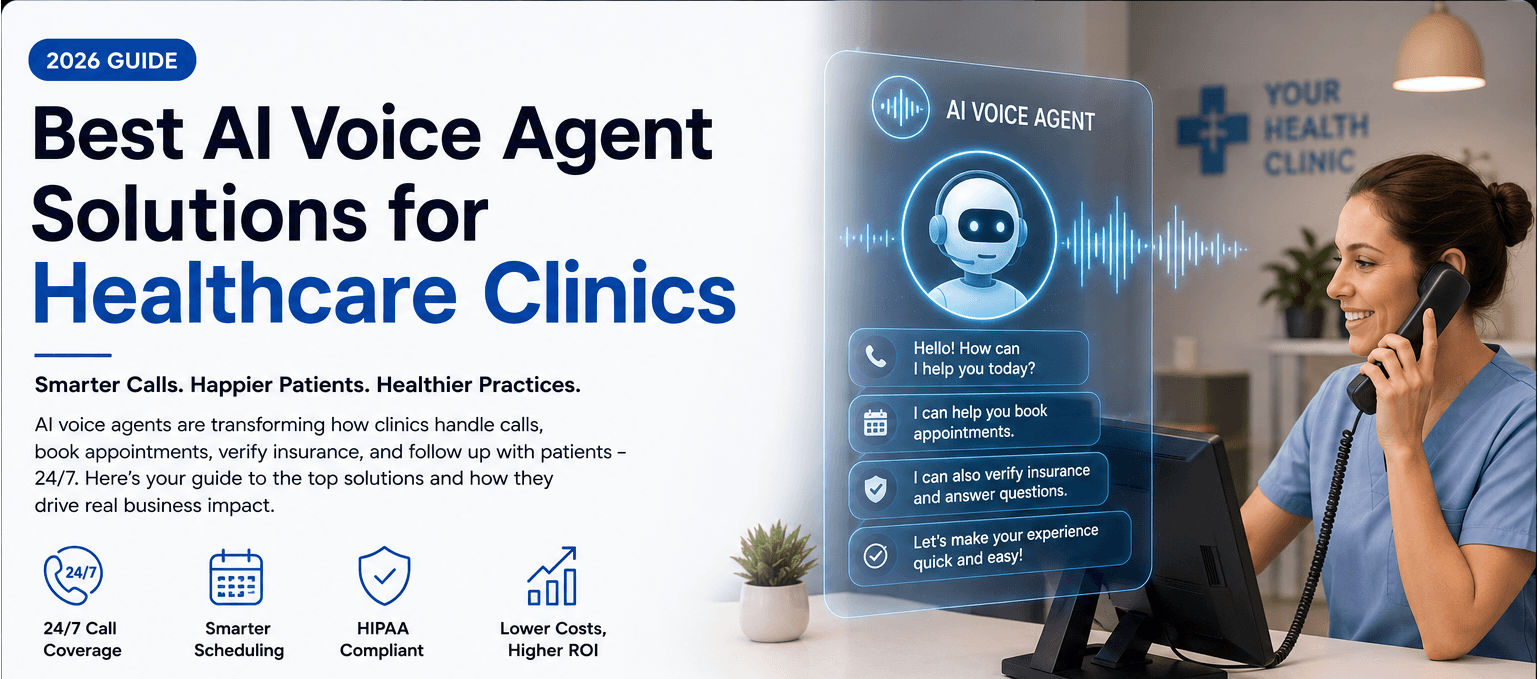
Healthcare is undergoing a digital transformation, and one of the most impactful innovations is AI voice calling. From answering patient calls 24/7 to scheduling appointments, handling prescription refill requests, and reducing administrative workload, AI voice agents are reshaping how healthcare providers communicate with patients.
Hospitals, clinics, diagnostic centers, dental practices, and telemedicine providers are increasingly adopting AI-powered voice assistants to improve patient satisfaction, lower operational costs, and allow healthcare professionals to focus on delivering quality care rather than managing routine phone calls.
In this comprehensive guide, you'll learn how AI voice calling works, its benefits, real-world use cases, implementation strategies, future trends, and why it is becoming an essential technology for modern healthcare organizations.
Why Healthcare Needs AI Voice Calling
Healthcare organizations face growing challenges every year. Rising patient expectations, increasing call volumes, staffing shortages, and administrative burdens make it difficult for front-desk teams to provide timely support.
Many clinics miss patient calls during busy hours, resulting in lost appointments, lower patient satisfaction, and reduced revenue. Patients also expect faster responses, 24/7 availability, and easy appointment scheduling without long wait times.
AI voice calling addresses these challenges by automating repetitive communication while ensuring every patient receives an immediate response.
Common Challenges Healthcare Providers Face
- High incoming call volumes
- Long patient wait times
- Missed appointments
- Limited staff availability
- Administrative overload
- After-hours calls going unanswered
- Increasing operational costs
AI voice agents provide a scalable solution that improves operational efficiency while maintaining a high-quality patient experience.
What is AI Voice Calling in Healthcare?
AI voice calling in healthcare refers to the use of artificial intelligence to automate patient phone conversations using natural, human-like speech.
Unlike traditional IVR systems that rely on rigid menu options, modern AI voice agents understand natural language, respond conversationally, and complete complex tasks in real time.
Core Technologies Behind AI Voice Calling
- Speech Recognition (ASR)
- Natural Language Processing (NLP)
- Large Language Models (LLMs)
- Text-to-Speech (TTS)
- Machine Learning
- CRM Integration
- EHR/EMR Integration
Together, these technologies enable AI voice agents to understand patient requests, provide accurate responses, and automate administrative workflows efficiently.
A typical AI voice call follows a structured workflow that mimics a human receptionist while operating much faster and around the clock.
- Patient calls the healthcare provider.
- AI answers the call instantly.
- The system verifies patient identity.
- AI understands the patient's request.
- The appointment is booked or updated automatically.
- CRM and EHR records are updated.
- Confirmation is sent via SMS or email.
- Complex cases are transferred to a human representative.
This automated workflow reduces wait times, minimizes manual effort, and ensures consistent service quality across every patient interaction.
AI voice agents remain available around the clock, ensuring patients receive immediate assistance regardless of business hours.
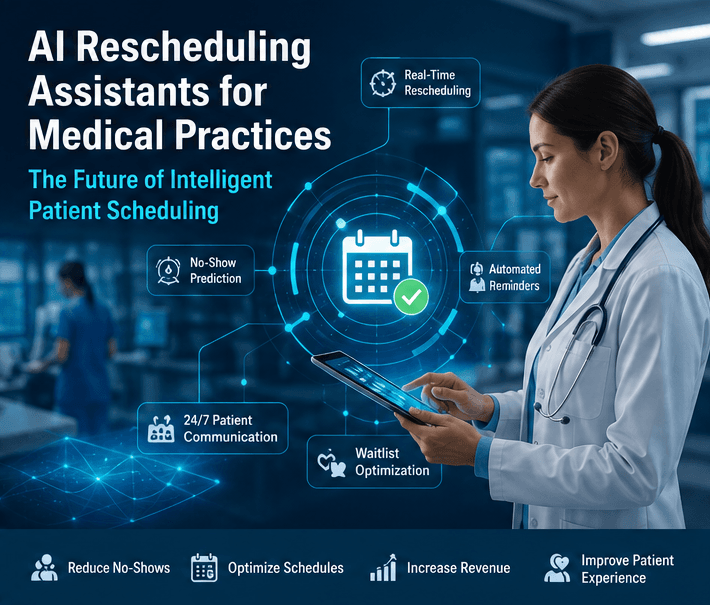
Patients can book, reschedule, or cancel appointments within seconds without waiting for staff.
3. Reduced Administrative Workload
Routine tasks such as answering FAQs, collecting patient details, and sending reminders are automated, allowing healthcare staff to focus on patient care.
4. Lower Operational Costs
By automating repetitive phone conversations, healthcare organizations can reduce staffing costs while maintaining excellent service quality.
5. Improved Patient Experience
Patients benefit from shorter wait times, instant responses, and seamless communication throughout their healthcare journey.
The Future of AI Voice Calling in Healthcare
The next generation of AI voice calling will move far beyond answering phone calls and booking appointments. AI voice agents are evolving into intelligent healthcare assistants capable of understanding patient intent, predicting healthcare needs, coordinating care across multiple systems, and providing personalized support throughout the patient journey.
As artificial intelligence continues to mature, healthcare providers will increasingly rely on voice AI to improve patient engagement, streamline operations, and deliver proactive healthcare services rather than reactive support.
Instead of functioning as a virtual receptionist, future AI voice agents will become trusted digital care coordinators that work alongside doctors, nurses, administrative teams, and patients.
Emerging Trends Shaping the Future of AI Voice Calling
1. Hyper-Personalized Patient Conversations
Future AI voice agents will recognize returning patients, access their appointment history, understand their communication preferences, and deliver highly personalized conversations. Rather than asking repetitive questions, AI will remember previous interactions and continue conversations naturally.
For example, an AI assistant could remind a diabetic patient about an upcoming HbA1c test, recommend scheduling a follow-up consultation, and answer medication-related questions based on previous appointments.
2. Predictive Healthcare Communication
Instead of waiting for patients to call, AI voice systems will proactively identify patients who require preventive care, annual screenings, vaccination reminders, prescription renewals, or follow-up consultations.
Using predictive analytics, healthcare organizations can improve preventive care while reducing hospital readmissions and missed appointments.
3. Emotion-Aware Voice AI
Advancements in speech analysis will enable AI voice agents to recognize emotional cues such as stress, anxiety, confusion, or urgency during conversations.
When signs of emotional distress are detected, AI can immediately escalate the conversation to a healthcare professional, ensuring patients receive appropriate attention without unnecessary delays.
4. Multilingual Healthcare Communication
Healthcare providers increasingly serve patients from diverse linguistic backgrounds. Future AI voice assistants will communicate fluently across dozens of languages while preserving medical accuracy and conversational context.
This will reduce communication barriers and improve healthcare accessibility worldwide.
5. Voice Biometrics for Secure Patient Verification
Rather than relying on multiple security questions, AI voice systems will use voice biometrics to verify patient identity within seconds.
This technology improves security while creating a faster and more seamless patient experience.
How AI Voice Calling Will Transform Different Healthcare Organizations
Hospitals
- Automated patient triage
- Department routing
- Discharge follow-up calls
- Medication reminders
- Emergency escalation
Primary Care Clinics
- Appointment scheduling
- Patient registration
- Routine health reminders
- Follow-up communication
Dental Clinics
- Treatment confirmations
- Recall reminders
- Insurance verification assistance
- Post-treatment follow-ups
Diagnostic Centers
- Test scheduling
- Preparation instructions
- Report notifications
- Patient assistance
Telemedicine Providers
- Virtual consultation scheduling
- Technical assistance
- Appointment reminders
- Patient onboarding
AI Voice Calling and Electronic Health Record (EHR) Integration
One of the biggest advancements in healthcare automation is the integration of AI voice agents with Electronic Health Records (EHR) and practice management systems.
Instead of operating independently, future AI voice assistants will securely retrieve patient information, update appointment records, document interactions, and synchronize information across healthcare platforms.
This reduces manual data entry while ensuring healthcare professionals always have access to accurate patient information.
Will AI Replace Healthcare Receptionists?
One of the most common misconceptions is that AI will replace healthcare receptionists. In reality, AI is designed to automate repetitive administrative work—not replace human expertise.
Routine tasks such as appointment scheduling, reminder calls, insurance inquiries, and frequently asked questions can be handled by AI, while complex conversations, emergency situations, and emotionally sensitive interactions remain with trained healthcare professionals.
The future is based on collaboration between AI and healthcare teams rather than replacement.
Challenges Healthcare Providers Must Prepare For
Data Privacy and Compliance
Healthcare organizations must ensure AI systems comply with regulations such as HIPAA, GDPR, and local healthcare privacy laws.
Human Escalation
AI should always recognize situations where human intervention is required and transfer calls without friction.
Integration Complexity
Voice AI should integrate seamlessly with existing scheduling software, CRM platforms, EHR systems, and communication channels.
Continuous AI Training
Healthcare terminology evolves constantly. AI systems require ongoing updates to remain accurate, compliant, and context-aware.
Best Practices for Implementing AI Voice Calling
- Identify repetitive call workflows.
- Define clear patient communication goals.
- Choose an AI platform designed for healthcare.
- Integrate calendars, CRM, and EHR systems.
- Create natural conversation flows.
- Test extensively before deployment.
- Launch gradually and monitor performance.
- Continuously improve AI responses using analytics.
What Healthcare Leaders Should Consider Before Adoption
Healthcare executives evaluating AI voice technology should focus on long-term value rather than short-term automation. The right solution should improve patient experience, integrate with existing infrastructure, comply with healthcare regulations, and scale as the organization grows.
It is also important to choose AI solutions that provide transparent analytics, customizable workflows, multilingual capabilities, and seamless human handoff for complex interactions.
The Road Ahead: What Healthcare Could Look Like by 2030
By 2030, AI voice calling is expected to become a standard component of healthcare operations rather than an emerging technology. Patients may schedule appointments, receive personalized health guidance, refill prescriptions, complete pre-visit assessments, and receive post-treatment follow-ups entirely through intelligent voice conversations.
Future AI voice assistants will not simply answer phones—they will coordinate care journeys, identify health risks, support chronic disease management, assist clinicians with documentation, and help healthcare organizations deliver more efficient, accessible, and patient-centered services.
Organizations that invest early in AI-powered communication will be better positioned to improve operational efficiency, increase patient satisfaction, and remain competitive in an increasingly digital healthcare landscape.
Conclusion
AI voice calling is redefining healthcare communication by making patient interactions faster, smarter, and more accessible. While today's AI voice agents already automate appointment scheduling, reminders, and patient inquiries, the future promises far greater capabilities—from predictive outreach and emotion-aware conversations to seamless EHR integration and personalized healthcare support.
Rather than replacing healthcare professionals, AI will serve as an intelligent partner that reduces administrative burden, enhances patient engagement, and enables medical teams to focus on what matters most: delivering exceptional patient care.
As healthcare continues its digital transformation, organizations that embrace AI voice technology today will be better prepared for the connected, data-driven, and patient-centric healthcare ecosystem of tomorrow.
Key Takeaways
- •AI voice agents are evolving from virtual receptionists to intelligent healthcare assistants.
- •Predictive and personalized patient communication will shape the future of healthcare.
- •Voice AI will integrate deeply with EHR, CRM, and clinical workflows.
- •Emotion-aware and multilingual AI will improve patient engagement and accessibility.
- •Healthcare teams will use AI to augment—not replace—human staff.
- •AI voice calling will become a core technology for modern healthcare operations.
- •Early adoption will help providers improve efficiency, patient satisfaction, and scalability.
- •The future of healthcare communication is proactive, data-driven, and AI-powered.
Feature Comparison Analysis
| Feature | Traditional Healthcare Phone Systems | Future AI Voice Calling |
|---|---|---|
| Personalization | Limited patient context | Personalized interactions using patient history |
| Availability | Limited to business hours | 24/7 patient assistance |
| Patient Interaction | Manual and staff-dependent | Natural, AI-powered conversations |
| Appointment Management | Manual scheduling | Automated booking, rescheduling, and cancellations |
| Call Handling Capacity | One call per staff member | Handles multiple calls simultaneously |
| CRM Integration | Often requires manual updates | Real-time integration with healthcare systems |
| Language Support | Depends on staff availability | Multilingual communication at scale |
| Scalability | Requires additional hiring | Scales instantly with patient demand |